
A client once showed me a coating review that looked perfect on screen. Six months later, after hard washes, sun, road film, and a cold snap, the car still had gloss, but the behavior that mattered had faded first: less shedding, more spotting, more drag under the wash mitt.
That’s the problem with most ceramic coating reviews. They sell the first day, not the ownership period.
The Hidden Failures Behind Flashy Reviews
A weak review usually starts with the same formula. Freshly polished paint. Tight water beads. Dark reflections. A hand gliding across the hood. None of that is useless, but none of it tells you how the coating behaves when life gets involved.
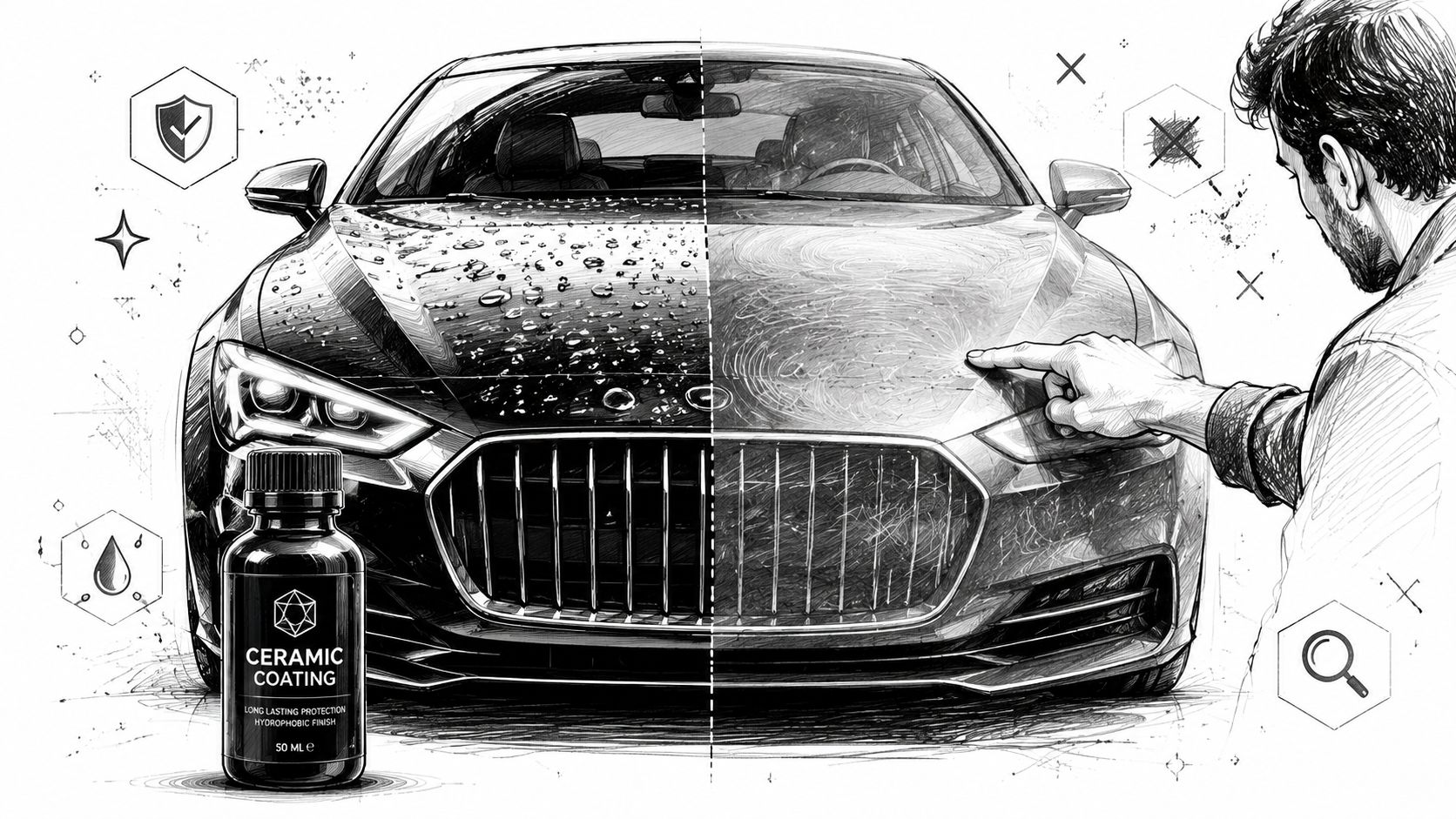
The category has also become crowded fast. The global ceramic coating market was estimated at USD 12.15 billion in 2024 and is projected to reach USD 25.60 billion by 2034, which means more products, more sellers, and a lot more noise in ceramic coating reviews according to Precedence Research’s ceramic coating market outlook.
What glossy reviews miss
The failures that frustrate owners rarely look dramatic at first. The coating doesn’t suddenly vanish. It gets weaker in ways casual reviewers don’t track.
- Hydrophobic drop-off: Water still beads, but it stops leaving the panel cleanly.
- Surface contamination: Minerals, bug residue, and traffic film start clinging harder.
- Wash frustration: The car no longer feels easy to clean, even if it still looks shiny from ten feet away.
- Owner confusion: People think the coating failed, when in many cases the issue is degraded performance, poor prep, or poor maintenance.
Practical rule: If a review only shows beading on day one, it isn’t a durability review. It’s a product demo.
I’ve seen owners choose a package because the video looked dramatic, then get disappointed because nobody explained cure discipline, wash technique, or how contamination changes surface behavior over time. That gap is where most bad buying decisions happen.
The review should follow the ownership cycle
A credible review has to ask different questions at each stage:
| Ownership stage | What should be reviewed |
|---|---|
| Right after install | Finish quality, leveling, streak risk, user difficulty |
| First days | Cure sensitivity, water exposure risk, maintenance restrictions |
| First months | Ease of washing, spotting resistance, contamination release |
| Longer term | Retained behavior, not just retained shine |
If you’re comparing packages, look for reviews tied to real use, not just a reveal shot. That matters even more when buyers are considering longer-term options such as a 5-year ceramic coating package, where prep quality and aftercare often decide whether the result feels worth the money.
What Credible Coating Reviews Actually Measure
A professional review doesn’t obsess over one flashy trait. It checks whether the coating solves real problems on a real vehicle.
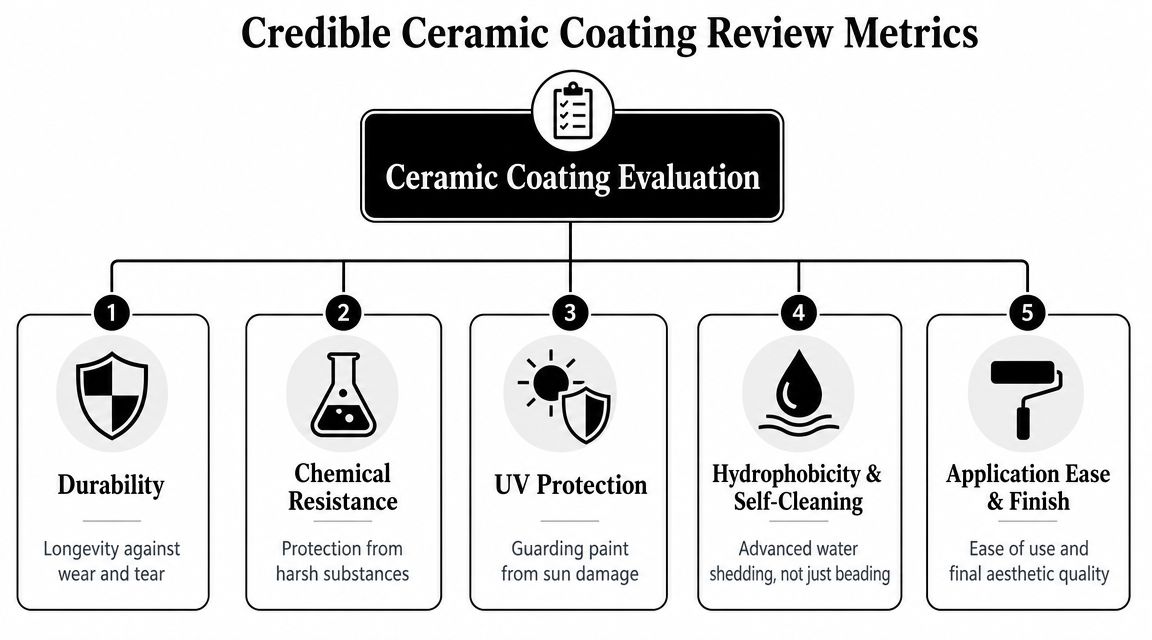
The technical baseline starts with surface behavior. Quality coatings are commonly reported with water contact angles around 100–115°, but that alone doesn’t tell the full story. Strong reviews also look at how the protective film, typically 0.5–2 microns thick in single-layer systems, handles bird droppings, acid rain, and other real contaminants, as explained in Mobigleam’s guide to what to look for in ceramic coating.
Hydrophobicity is not just beading
Regarding this point, many reviews miss the mark. Tight beads look impressive, but a car owner lives with runoff, spotting, and wash effort, not with a still photo of round water droplets.
A better review asks:
- Does water leave the panel easily?
- Do contaminants dwell on the paint or move off quickly?
- Does the car wash cleaner after exposure to bug residue or bird droppings?
A coating can bead well and still leave too many droplets behind. That often means more spotting, not less.
Good ceramic coating reviews separate visual drama from practical behavior.
Gloss and slickness matter, but they’re not protection
Gloss sells coatings. Slickness helps owners feel the result. Both matter. Neither should dominate the score.
A strong finish can still hide weak chemical resistance. A slick hood can still become annoying to maintain if the coating loses release properties early. Reviews should describe the finish, but they should also say what happened after washes, sun exposure, and contamination.
Hardness claims need context
The industry loves hardness language because it sounds decisive. Buyers hear “harder” and assume “better.” That shortcut causes trouble.
Hardness by itself doesn’t answer the practical questions:
- Will the film stay uniform?
- Will it tolerate expansion and contraction of the panel beneath it?
- Will poor washing still mar the surface?
- Does the review clearly admit that coatings are not scratch-proof?
A useful review treats hardness as one property among several, not as the whole story.
Application quality changes the outcome
Even a strong chemistry underperforms on bad prep. That’s why I pay attention to whether a review discusses polishing residue removal, surface decontamination, temperature, humidity, and wipe discipline.
If you want to understand why some coatings hold and others don’t, start with coating adhesion fundamentals. The bond to the substrate often tells you more than a marketing hardness graphic ever will.
From The Lab To Your Driveway Common Test Methods
The lab is useful. It gives consistency, repeatability, and a controlled way to compare formulas. But coatings don’t live in a controlled room. They live on hot panels, cold panels, dirty panels, neglected panels, and badly washed panels.
That’s why I never trust a review that leans on one type of evidence.
What controlled testing does well
Bench testing helps isolate variables. You can compare chemical exposure, visual change, surface response, and application behavior without road grime muddying the result.
This matters during development. It also matters when a brand wants to see whether one resin system or additive package outperforms another under the same conditions. Controlled testing is where you identify tendencies before the coating ever hits a customer’s car.
What real use exposes fast
Real driving introduces a mess that lab work can’t fully mimic. Hard water dries unevenly. Bird droppings bake in the sun. A rushed wash puts fresh marring into a coated panel. Winter grime sits on the lower doors longer than it should. Heat and cold cycle the substrate over and over.
Those conditions reveal traits that polished review videos usually skip:
- How easily contamination releases
- How sensitive the coating is to bad wash habits
- Whether the finish stays uniform
- How the coating behaves after repeated environmental swings
The driveway is where a coating’s personality shows up.
That’s also why I give more weight to reviews that include follow-up observations after regular use than to dramatic first-day reveals.
Why both forms of validation matter
If you only use lab data, you can miss application reality. If you only use anecdotal ownership stories, you can miss repeatable technical patterns. The strongest evaluation combines both.
For installers and mobile detailers, the practical question is simple: does the chemistry stay cooperative outside ideal conditions? Titan discusses that broader validation mindset in its overview of coating testing methods, which is the right conversation to have when separating controlled claims from field behavior.
Decoding The Hype And Spotting Unreliable Reviews
Bad ceramic coating reviews usually don’t lie outright. They distract you. They focus your attention on the easiest thing to film and the hardest thing to verify later.
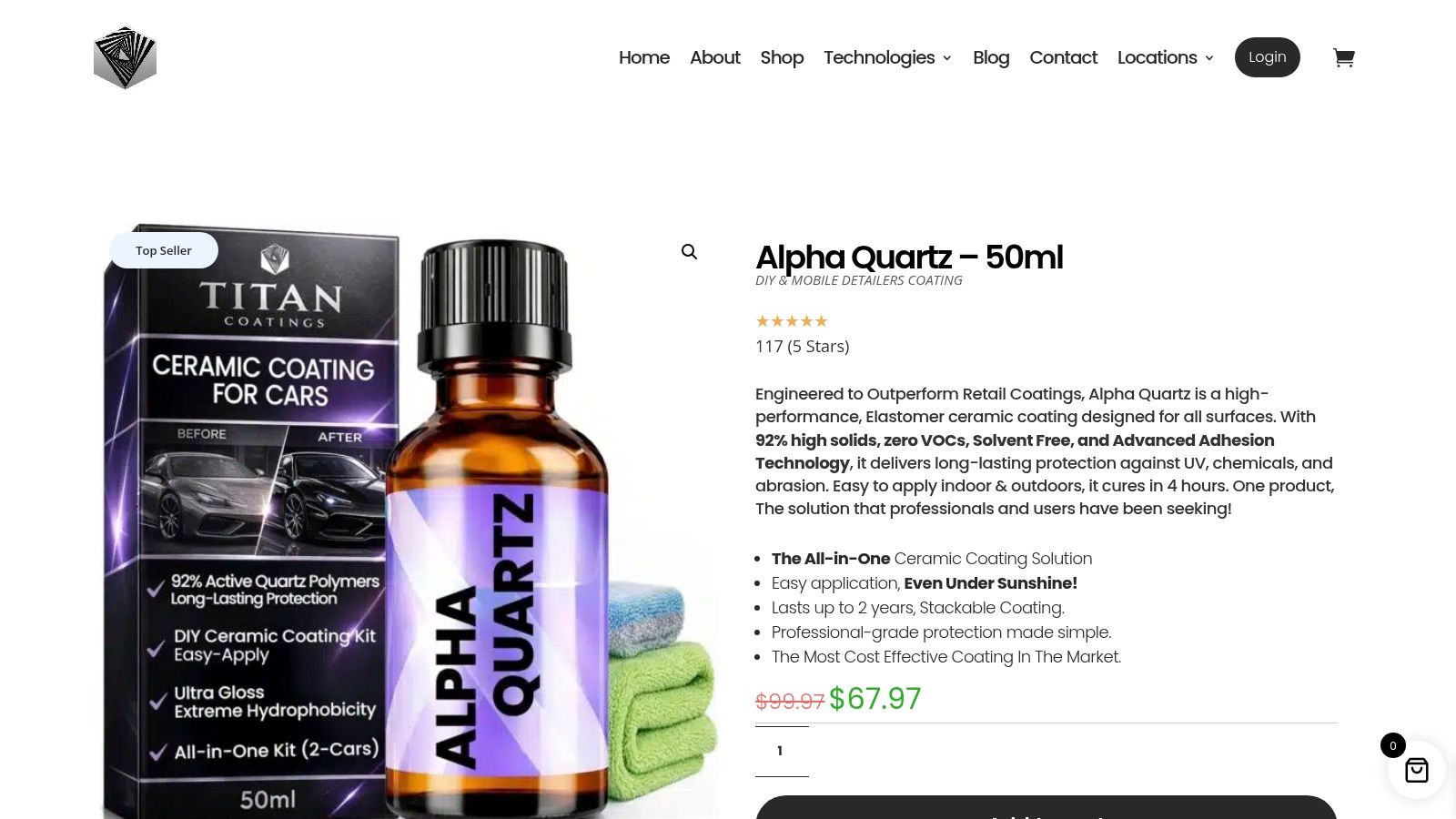
The biggest tell is exaggerated durability language. Real-world performance fades gradually, and a long-term test of 35 coatings reported measurable changes in beading and chemical resistance after 12–18 months, showing how much maintenance and climate affect the result, as discussed in Vive Houston’s long-term take on ceramic coatings.
Red flags that should slow you down
When I read or watch ceramic coating reviews, these are the omissions that matter most:
- No prep discussion: If the reviewer never mentions decontamination or paint correction, they’re skipping the foundation.
- Scratch-proof language: Coatings can improve resistance to minor defects in use, but they do not make paint invincible.
- Beading as the whole verdict: Strong beads alone don’t prove easier cleaning or better contaminant release.
- No maintenance talk: Longevity without care instructions is a sales line, not a review.
- No cure-window warning: If water exposure right after install isn’t mentioned, the review is incomplete.
Review quality and reputation are linked
Installers and brands now live under constant public feedback. That’s pushed many shops to improve how they explain results, aftercare, and expectation-setting. If you want a broader sense of how review ecosystems are evolving, the reputation management software forecast for 2026 is useful because it shows how businesses increasingly organize, monitor, and respond to customer sentiment at scale.
That matters here because the ceramic coating industry often has a review quality problem, not just a chemistry problem.
The hardness obsession misses a real weakness
Years ago, much of the market became fixated on “9H” style messaging. The trouble is that buyers often interpret that as a complete performance grade. It isn’t.
A very hard film can still be brittle. On a vehicle, the substrate moves. Panels expand and contract with temperature shifts. Impacts happen. Wash marring happens. If a review celebrates hardness but never addresses brittleness, flexibility, or long-term surface behavior, it’s leaving out a critical trade-off.
That’s where products built around resilience rather than hardness-alone start making more sense. Titan’s Ceramic 9H coating page is a good reminder that the number itself shouldn’t be the buying decision. The chemistry and film behavior matter more than the badge.
The Next Evolution Flexible Elastomer Coatings
Traditional ceramic language often treats the ideal coating like a thin sheet of glass. Hard. Glossy. Stable. That sounds good until the car leaves the shop and starts dealing with real movement and real impact.
Metal expands and contracts. Plastic trim moves differently than painted steel. A hood heats up, cools down, gets hit by bugs, then gets washed by someone using too much pressure and not enough lubrication. A brittle film can protect well and still have a weakness built into its structure.
Why flexibility changes the conversation
A flexible coating doesn’t mean a soft, weak coating. It means the film can absorb more real-world stress without behaving like a rigid shell.
That matters in the exact failure modes many reviews ignore:
- Temperature cycling
- Minor impact stress
- Panel movement
- Long-term film integrity
In practical detailing terms, the coating has to do more than look hard. It has to stay coherent.
A coating that can move with the surface often holds its behavior better than one that only wins the hardness argument on paper.
Where elastomer systems fit
This is the part of the category that deserves more attention. Elastomer-based coatings aim to combine the protective feel people expect from ceramic chemistry with a degree of flexibility that helps the film tolerate real service conditions.
That’s why I think flexible coating design is one of the more important developments in ceramic protection. It directly addresses a problem owners experience, even if they don’t describe it in technical terms. They just know one coating stayed easier to live with, and another one didn’t.
For buyers who want to understand that concept more thoroughly, Titan’s overview of coating flexibility is relevant because it frames film behavior around stress tolerance instead of just showroom gloss.
One product example that fits this discussion is APEX NANO ONE from Titan Coatings. It’s positioned as a ceramic coating for paint, PPF, plastic, vinyl, and wheels, and it’s the kind of multi-surface option that makes sense for detailers who care about practical install workflow as much as finish appearance.
Glass matters too
This same logic shows up on glass, where owners often overfocus on bead size and underfocus on visibility. A useful windshield coating should improve shedding in moving rain and make cleanup simpler. That’s why glass-specific formulas such as Apex Glass Coating deserve separate attention instead of being lumped in with paint coatings.
If the goal is less stress in bad weather, you want behavior that supports visibility, not just a video of dramatic beading on parked glass.
Your Pre-Purchase Checklist For Installers And Vendors
The right questions save people from expensive disappointment. Most bad coating purchases happen because the buyer asks, “How long does it last?” and never gets past that.
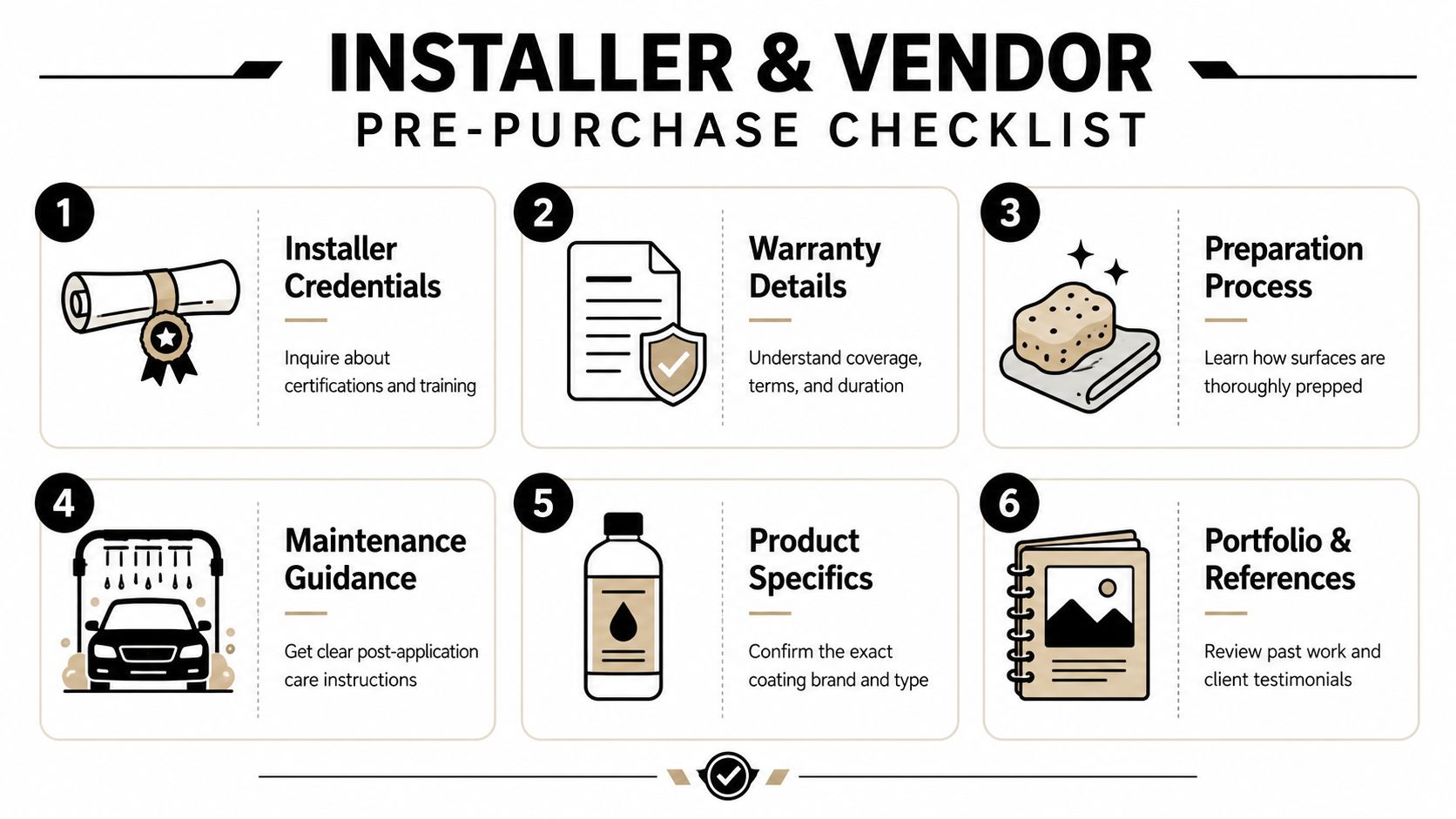
Application quality decides a huge part of the outcome. Car and Driver notes a cure timeline with a vulnerable 0–24 hour window, an initial cure at 24–48 hours, and full hardness at 7–14 days. The same guidance also notes that many consumer coatings last about 2–3 years, while higher-end professional systems can exceed 5 years with proper prep and maintenance, which is why installer discipline matters so much in Car and Driver’s ceramic coating testing guide.
The questions that reveal whether a seller knows the work
Ask these before you book:
| Category | Question to Ask |
|---|---|
| Installer Credentials | What training do you have with this specific coating system? |
| Warranty Details | What does the warranty actually cover, and what voids it? |
| Preparation Process | How are you washing, decontaminating, and correcting the surface before installation? |
| Maintenance Guidance | What should I avoid during cure, and how should I wash it afterward? |
| Product Specifics | Which exact coating are you installing on paint, trim, wheels, and glass? |
| Portfolio and References | Can you show work after time in service, not just delivery-day photos? |
What a good answer sounds like
A reliable installer doesn’t get vague when you ask about prep. They can describe the wash, decontamination, inspection, and wipe-down process in plain language. They also won’t dodge cure instructions.
Listen for clarity on these points:
- Cure discipline: They should explain when the car can get wet and when it can be washed.
- Maintenance reality: They should admit the car still needs careful washing.
- Surface-specific planning: They should distinguish paint from glass, wheels, trim, and PPF.
- Expectation setting: They should tell you what the coating will not do.
If the seller talks only about shine and never about aftercare, keep shopping.
For buyers comparing flexible systems against conventional ceramic packages, it’s also worth asking how the brand explains film movement, temperature swings, and real-world wear instead of only citing hardness language.
If you’re comparing products instead of just reading ceramic coating reviews, take a close look at APEX NANO by Titan Coatings. The product lineup includes paint, spray, and glass-focused options, which makes it easier to match the coating to the vehicle, the installer’s workflow, and the owner’s maintenance habits instead of forcing one formula onto every surface.
0 Comments