
You’ve just washed your car, pulled it into the driveway, and watched water cling to the hood instead of rolling away. A few weeks later, the shine has softened, road film has returned, and the coating that promised years of protection already feels ordinary. That gap between marketing language and daily-driver reality is where most nanotechnology coating car advice falls short.
A nano coating can transform how paint behaves, but the bottle isn’t the whole system. Preparation, application, chemistry, weather, parking, washing, and the flexibility of the coating itself decide whether protection remains useful or fades early. After hundreds of vehicles and plenty of costly mistakes, the practical lesson is simple: the right coating applied badly is still a bad result.
Why Nanotechnology Coatings Transform Car Protection
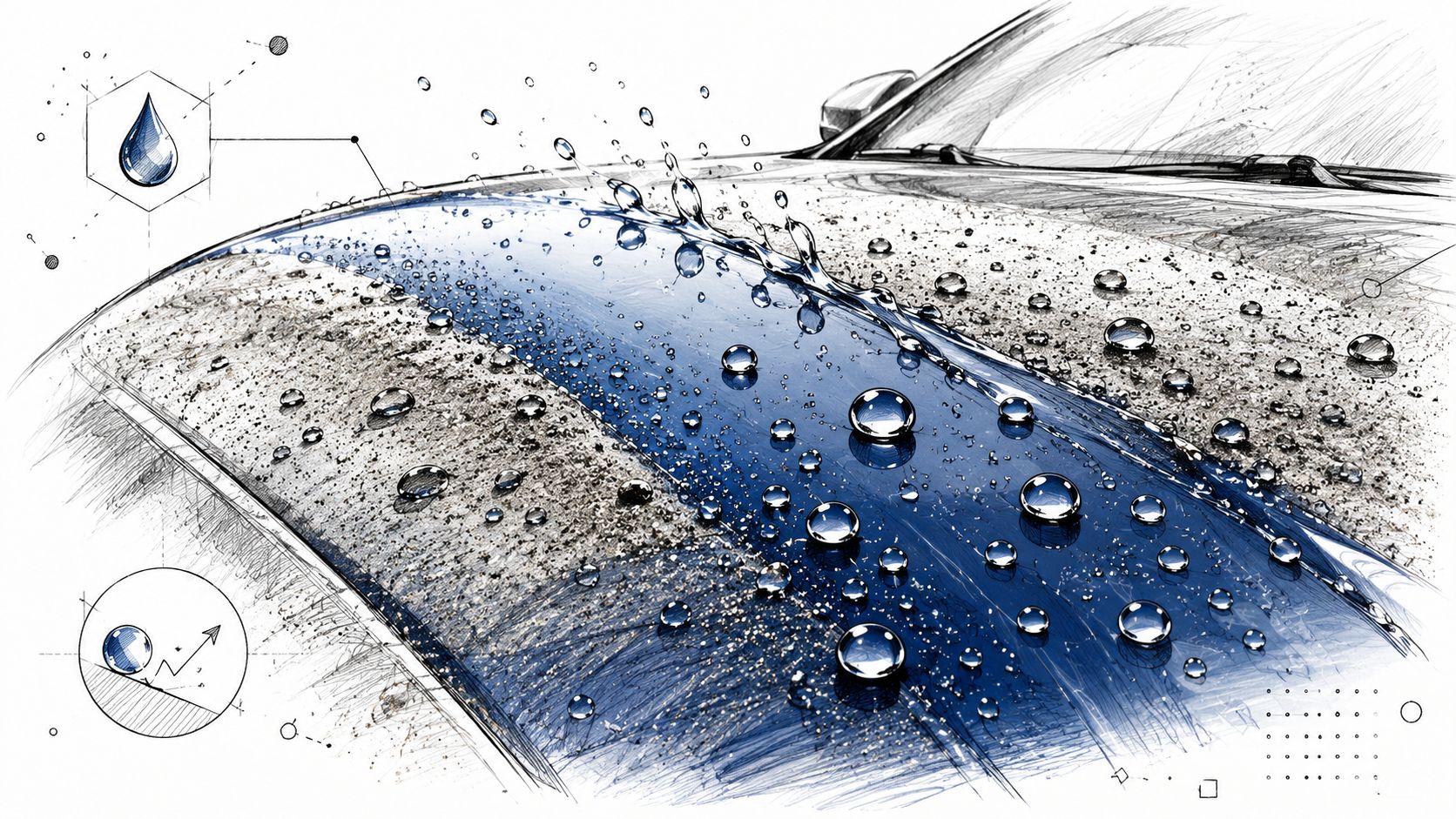
The first wash after a proper coating is always satisfying. Water hits the hood, breaks into tight beads, and moves toward the panel edge instead of spreading into a flat film. Dust and light road grime have less surface grip, so the next wash usually takes less effort. That behavior comes from a surface designed to repel water and reduce the way contaminants bond to the paint.
What the coating changes
A nanotechnology coating for a car forms a very thin protective film that interacts with the clear coat at a microscopic level. Rather than sitting on the surface like a traditional wax, the cured material creates a bonded barrier with water-repellent behavior. That doesn’t make paint invincible, but it can change how water, dirt, ultraviolet exposure, and light wash contact affect the finish.
The benefits customers notice most are practical:
- Hydrophobicity: Water and loose dirt release more easily, helping the car stay cleaner between careful washes.
- Resistance to light marring: A cured coating can help defend against some light surface marking, though it won’t stop deep scratches, stone chips, or careless washing.
- UV and chemical protection: The coating adds a barrier against environmental exposure that contributes to fading, oxidation, and staining.
The important distinction is between surface behavior and structural protection. Strong beading looks impressive, but beading alone doesn’t prove that the coating is thick, well bonded, or suitable for a particular vehicle. A product can bead beautifully and still fail early if the paint wasn’t prepared or the owner uses abrasive washing methods.
A growing category with uneven results
The broader nanocoatings market was estimated at USD 12,857.5 million in 2023 and is projected to reach USD 37,448.5 million by 2030, implying a 16.4% CAGR from 2024 to 2030. Automotive is explicitly listed among the key demand sectors in that global automotive ceramic coatings market overview.
That expansion brings better chemistry and more choice, but it also gives weak products room to hide behind impressive language. In the driveway, application quality matters more than a label promising extreme hardness or a long service life. The coating only protects the surface it reaches, and every contaminant left underneath becomes part of the finished appearance.
Surface Preparation That Determines Coating Lifespan
Most coating failures start before the bottle is opened. A dirty, oily, scratched, or contaminated panel gives the product a poor foundation, and the coating can lock those defects into place.
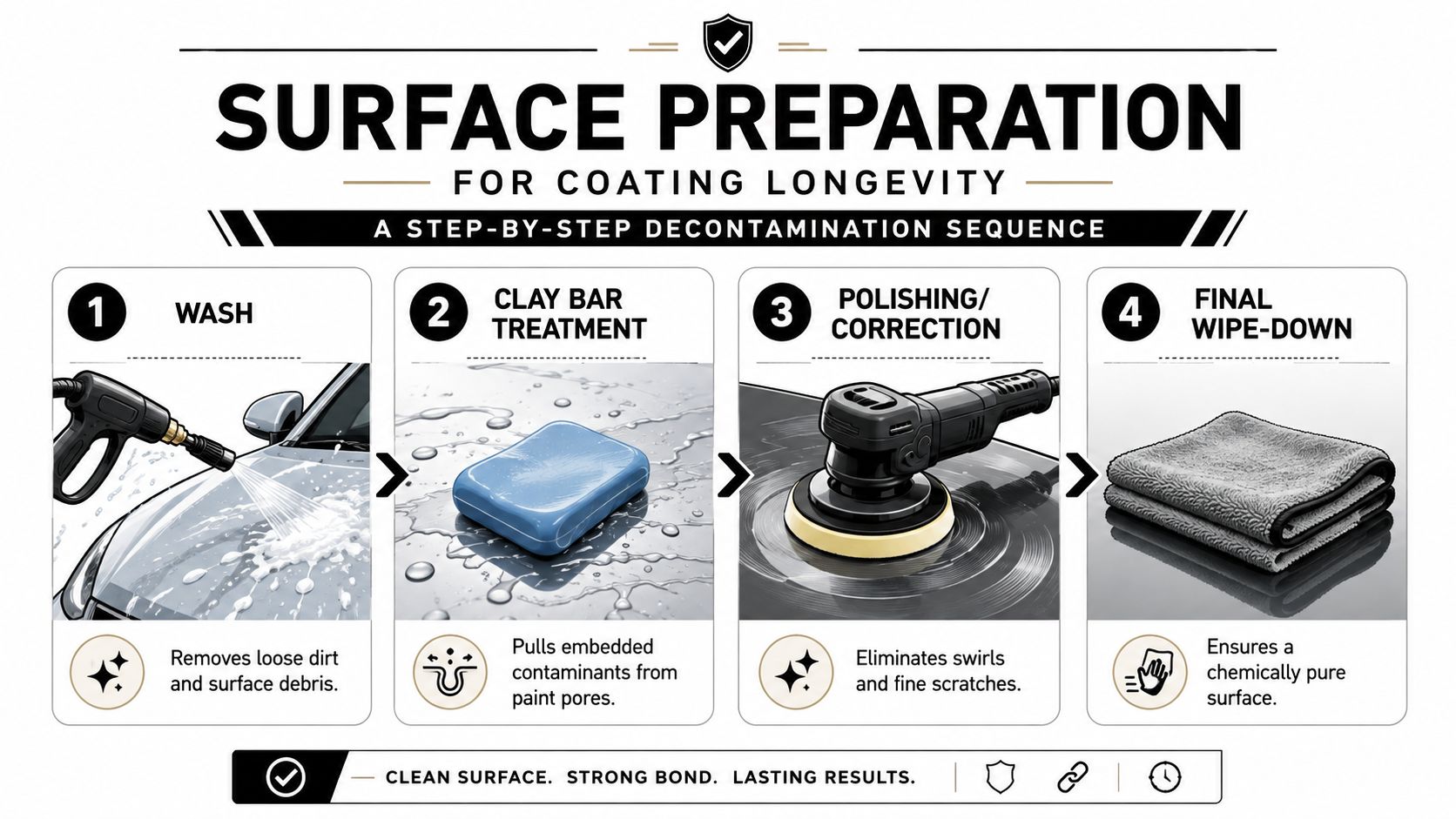
A reliable preparation sequence has four stages. Each removes a different kind of problem, so skipping one leaves a weakness that the next step may not correct.
Start with a clean, bare surface
Wash first. Use a safe wash process to remove loose grit, traffic film, and surface debris. Work from the top down, rinse the mitt often, and avoid dragging heavy contamination across the paint. The aim at this stage isn’t to create a perfect finish. It’s to make the later contact steps safer.
Clay-bar decontamination comes next. Even clean-looking paint can contain bonded particles, overspray, industrial fallout, and tar. A clay bar or synthetic clay towel pulls those contaminants from the paint pores. Use plenty of lubricant and light pressure. If the surface still feels rough under your fingertips after washing, it isn’t ready for coating.
Degrease the panel. Old waxes, sealants, polishing oils, and fingerprints can interfere with bonding. A suitable panel wipe removes those residues and gives you a chemically cleaner surface for inspection.
Polish where needed. Swirls, scratches, and tar spots don’t disappear under a transparent coating. They remain visible, and correcting them later means removing the coating first. The repeatable workflow of washing, clay-bar decontamination, degreasing, and polishing is also described in this independent review of automotive nano and ceramic coating application.
Control the environment
Shade is essential because direct sun can make a panel and coating flash too quickly. Keep the work area clean, dry, and protected from airborne dust. Moisture can begin hydrolysis in some coating systems, while infrared lamps may accelerate curing, so uncontrolled heat and humidity can change the working window.
A full prep can consume most of a working day on a neglected vehicle. Don’t rush it because the coating step looks more exciting. Detailers who spend the majority of their appointment correcting and cleaning the paint aren’t wasting time. They’re preventing defects that become harder and more expensive to remove later. For a practical checklist, use Titan’s guide to coating surface preparation.
Application Techniques for Flawless Results
Once the panel is clean and corrected, coating becomes a controlled placement process. The common driveway mistake is trying to cover too much paint at once. Large sections make it harder to see where product was applied, where it has flashed, and where residue remains.
Work in small zones
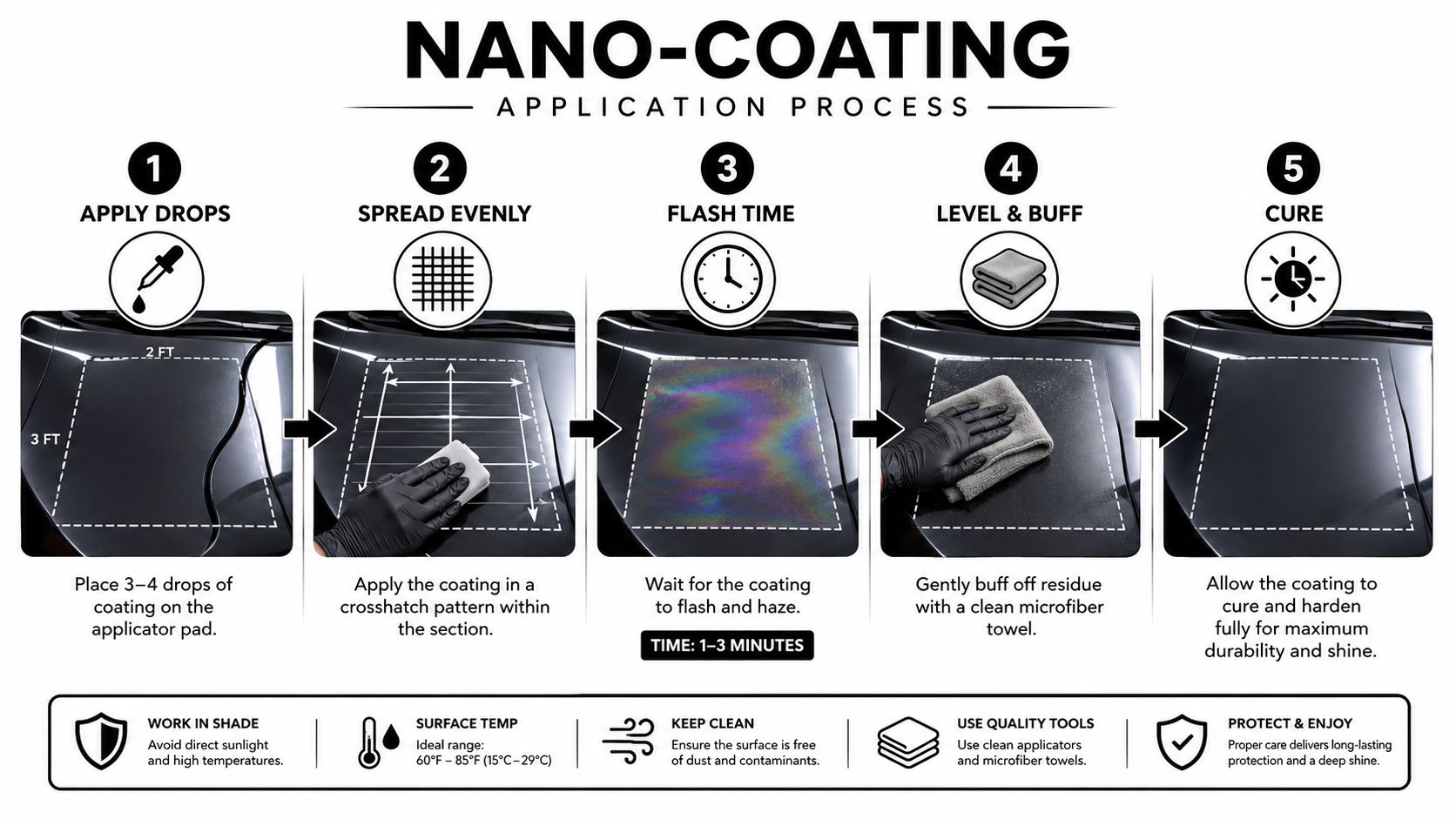
Manufacturer directions recommend a 2 ft × 3 ft working zone, a cross-hatch pattern, 1–2 minutes per section to apply, and 2–5 minutes of dwell before leveling. These timings come from the technical application guidance for nano-enabled coating systems, but the product label and current conditions should always control.
Apply the coating in straight passes from left to right, then repeat from top to bottom. The cross-hatch pattern helps distribute material evenly and exposes missed areas before the coating cures. Use enough product to maintain a wet film, but don’t flood the applicator or chase coverage far beyond the working zone.
Watch for the coating’s flash behavior. Depending on the formula and environment, the surface may show a haze or rainbow effect. Level during the stated window, not after the residue has hardened. Overextending the dwell can leave high spots that require correction, while under-application can create thin areas with uneven performance.
Towel control prevents expensive defects
Use a clean short-pile microfiber to level residue, folding it regularly so you’re always working with a fresh face. Follow with a clean, plush microfiber for the final buff. A towel that has picked up grit, dried product, or compound residue can introduce micro-scratches into freshly coated paint.
Inspect the panel from several angles under controlled lighting. High spots can look acceptable from one direction and obvious from another. If the coating system permits a second layer, follow the stated interval. The referenced technical directions specify a 30–60 minute interval before a second coat, but curing conditions and the manufacturer’s label remain decisive.
Replace contaminated applicators rather than trying to save them. The same technical guidance recommends changing the applicator after roughly half an average vehicle and warns that missed areas, excessive dwell, and contaminated tools can cause high spots, micro-scratching, or uneven curing. Titan’s ceramic coating application guide is useful for checking the workflow before starting.
Elastomer Technology vs Traditional Ceramic Coatings
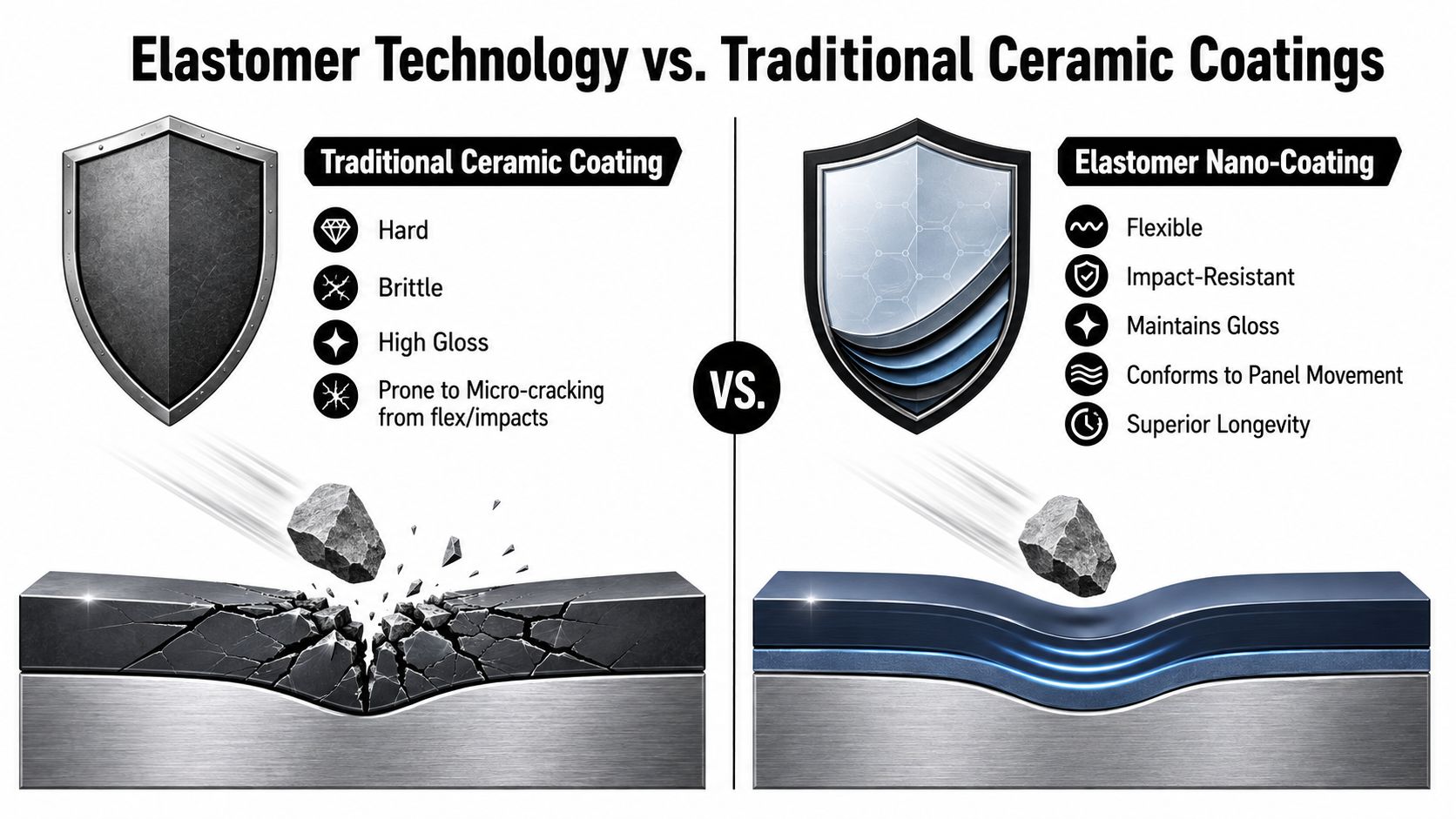
A traditional hard ceramic coating can deliver gloss and useful resistance, but hardness isn’t the only property that matters on a moving vehicle. Body panels flex, substrates expand and contract, and the car experiences impacts from grit, insects, and road debris. A coating that cannot accommodate movement may develop weaknesses even when the paint underneath remains sound.
That’s the case for elastomer coating technology. Instead of relying only on a rigid protective film, an elastomer is designed to remain flexible while retaining a hard, glass-like surface. The practical advantage is not that it prevents every defect. It’s that the coating can conform to small panel movement and thermal stress instead of behaving like a brittle shell.
Why flexibility matters on the road
Consider a vehicle parked outdoors during freezing weather, then exposed to strong heat later in the day. The coating and the panel don’t respond to temperature in exactly the same way. A flexible system has more ability to accommodate that mismatch.
The same principle applies when bugs strike the hood at speed or when a fender experiences movement during normal use. Flexibility can reduce the chance that small stresses turn into cracks or compromised areas. It won’t repair neglected paint, and it won’t replace paint protection film where impact protection is the priority, but it addresses a weakness that rigid coatings can have.
A 2014 study reported a superhydrophobic MWNT-silicone film that endured over 4,000 thermal cycles from −30 °C to room temperature. The study linked the design to thermal stress created by the difference in expansion between the coating and its substrate, as described in this research on anti-frost carbon nanotube composite coatings.
Titan’s approach to flexible protection
Titan Coatings describes its ElastoTek coatings as using proprietary Dark Matter Technology with carbon allotropes. The stated design goals include mechanical strength, thermal stability, electrical conductivity, and flexible elastomeric performance, details discussed in this peer-reviewed publication related to the technology.
For a DIY owner or mobile detailer, Alpha Quartz is positioned as an accessible elastomer option. It’s designed to be easy to install and suitable for situations where a controlled studio isn’t available. Its value is the combination of a hard surface and flexibility, not a promise that maintenance can be ignored.
Titan also offers information about UV coating technology for readers comparing surface protection approaches. The right choice still depends on preparation, climate, exposure, and washing habits.
Maintenance Mistakes That Destroy Coatings Prematurely
A coating isn’t maintenance-free. It’s maintenance-different. The owner no longer needs to wax constantly, but the washing method and chemical choices become more important because aggressive care can shorten the useful life of the protective layer.
The most common failure is an automatic brush wash. Abrasive contact, dirty brushes, and uncontrolled detergents can dull the surface and damage the coating. Independent guides report that consumer DIY coatings often last around 12–24 months in practice, while professionally installed coatings commonly land around 3–5 years, rather than broad 5–10 year marketing promises. The same guidance reports that poor preparation can reduce durability by 50% or more, and automatic car washes can kill a coating within 12–18 months. These figures come from this independent ceramic coating durability guide.
The chemistry can work against you
Alkaline tire dressings can migrate onto lower paint. Harsh degreasers can attack the protective layer. Incompatible toppers and sealants can also create confusing surface behavior, making it difficult to tell whether the coating is failing or just covered by another product.
Use a pH-neutral car shampoo, a clean microfiber wash mitt, and a two-bucket process. Rinse thoroughly before touching the paint, wash in straight sections, and dry with clean microfiber rather than allowing mineral-rich water to evaporate on the panel.
Practical rule: If a product wasn’t designed to work over your coating, don’t add it just because it makes water bead for a week.
Outdoor parking, bird residue, insects, industrial fallout, and repeated poor washing all increase exposure. Inspect the finish under diffused light and look for high spots, dull patches, water spotting, or areas where water behavior has changed. Titan’s ceramic coating maintenance guidance can help you build a routine around the coating rather than relying on occasional emergency correction.
Choosing the Right Coating for Your Situation
The best coating is the one that matches the vehicle’s use and the owner’s discipline. A weekend DIYer may value a forgiving product and a straightforward cure process more than maximum hardness. A mobile detailer needs predictable application across changing locations, while a garage-kept enthusiast may be willing to invest in meticulous correction and controlled curing.
Alpha Quartz suits a DIYer or mobile professional looking for an elastomer coating that’s easy to install and delivers a hard yet flexible surface. Ultra Ceramic Spray is a practical option for quick application and ongoing protection, with Titan positioning it for 12-month durability. Before choosing between products, compare the broader trade-offs in this resource on PPF vs ceramic vs sealant.
For rain-heavy driving, APEX Glass deserves separate consideration. Titan presents its glass and windshield coating as easy to use and intended to improve water behavior on glass, which can enhance visibility and make wet-weather driving less stressful. See the APEX Glass ceramic coating before applying any glass product.
A professional-grade elastomer coating makes more sense when the owner wants multi-year protection and can support it with careful washing. A DIY project makes sense when you can control preparation, shade, tools, and inspection. For a deeper comparison of technologies, review Titan’s guide to ceramic coating vs nano coating. Ask any detailer to explain the prep process, cure conditions, maintenance plan, and realistic lifespan for your parking, climate, and wash pattern.
APEX NANO – Titan Coatings offers flexible elastomer options such as Alpha Quartz, glass protection through APEX Glass, and convenient application with Ultra Ceramic Spray for different vehicle-care routines. Visit APEX NANO – Titan Coatings to compare the products and choose a nanotechnology coating car system that fits your vehicle, environment, and maintenance habits.
0 Comments