
A motorcycle windscreen can look perfect when it leaves the shop and still develop a web of fine marks after one season of road dust, careless wiping, and wiper-like contact from a cleaning towel. The owner often expects the damage to polish away like glass, then discovers that polycarbonate behaves differently. Aggressive polishing can remove material, distort the optical surface, or leave an uneven finish.
That’s why a scratch resistant coating for polycarbonate should be treated as an engineered surface system, not a magic “scratch-proof” label. The coating has to balance hardness with adhesion, flexibility, optical clarity, UV stability, and chemical resistance. A rigid film may score well in one laboratory test and still crack or delaminate when the plastic flexes, heats, cools, or takes an impact.
This guide follows the same questions I’d walk through with a detailing client: why the substrate scratches, which coating families exist, which test results matter, and how an elastomer-based approach changes the durability equation.
Why Polycarbonate Needs a Scratch Resistant Coating
Polycarbonate earns its place on headlights, motorcycle windscreens, protective covers, and aftermarket windows because it’s lightweight, clear, and highly impact resistant. Its weakness is the surface. Polycarbonate has high impact resistance but low scratch resistance, so dust, grit, ice scraping, and poor cleaning technique can create micro-abrasions that scatter light.
The problem often starts subtly. A vehicle owner notices a little haze when the headlight catches low sunlight. A rider sees fine arcs across a windscreen at night. A detailer sees that the surface still feels smooth to the hand, yet the optical clarity has already declined. The marks aren’t always deep enough to feel like traditional scratches, but they’re large enough to affect reflection and visibility.
Practical rule: Treat polycarbonate as a tough core with a vulnerable skin. Protect the skin before repeated abrasion turns cosmetic wear into an optical problem.
A coating acts as a sacrificial or engineered barrier. Instead of forcing the bare plastic to absorb every contact event, the surface layer distributes the load and reduces direct deformation of the substrate. The coating doesn’t make the part immune to wear. It gives the wear a better surface to act on.
Two threats deserve special attention:
- UV exposure: Sunlight can contribute to surface degradation, yellowing, and embrittlement. A deteriorating surface becomes less forgiving during washing and abrasion. Titan’s discussion of a UV protective coating for polycarbonate addresses this protection requirement as part of the overall surface strategy.
- Abrasive contact: Road grit, dirty microfiber towels, dry wiping, ice scrapers, and contaminated wash tools can all create fine damage. The harder the particles and the greater the pressure, the more quickly the surface loses clarity.
The engineering history reflects this limitation. Hard coats became standard for applications such as eyewear lenses and exterior automotive components because polycarbonate needed additional abrasion protection. In one published comparison using ASTM D1044 with a Taber abrader, CS10F wheels, and a 500 g load, hard-coated polycarbonate showed about 6% to 10% haze increase after 1,000 cycles, while glass showed about 1.0% under the same test conditions. Those results don’t make glass the universal answer. Polycarbonate still offers a valuable combination of low weight and impact toughness, but it needs a surface system matched to its job.
A well-selected coating can help a detailing client preserve appearance, maintain usable clarity, and reduce the pressure to replace a lens or panel prematurely. The right promise is longer serviceability and more confidence during cleaning, not permanent immunity from scratches.
The Main Types of Scratch Resistant Coatings
Coating families make more sense when viewed as a progression. Each approach tries to harden the surface, but each handles movement, stress, processing, and repair differently.
Factory hardcoats form the first layer of protection
Thermally cured or UV-cured polysiloxane hardcoats are commonly applied during polycarbonate manufacturing. They create a thin, glass-like surface with a silicate-rich structure. The goal is straightforward: give a soft plastic a harder outer skin without sacrificing its impact properties.
Historical development moved from basic hard coats in the 1970s toward more advanced UV-curable and hybrid systems by the 1990s and early 2000s, as described in this technical overview of polycarbonate coating development. Modern coated products commonly report pencil hardness moving from bare polycarbonate around B to HB toward about 2H to 3H, with improved abrasion performance.
Sol-gel and ceramic hybrids increase network density
Sol-gel coatings use alkoxysilane precursors that form an inorganic or hybrid network as they crosslink. Think of the process as building a fine molecular mesh over the plastic. The denser the network, the better the surface may resist deformation, but excessive rigidity can create a mismatch with a flexible substrate.
Some sol-gel and hybrid systems deliver strong optical performance alongside abrasion resistance. One technical example reported coated polycarbonate plates at about 0.8% delta haze after 1,000 Taber cycles, compared with 3.3% for a less advanced coating, showing why formulation and crosslink density matter.
DLC films prioritize hardness, with trade-offs
Diamond-like carbon, or DLC, is deposited as a very thin film through methods such as sputtering or plasma-enhanced chemical vapor deposition. It’s attractive where high hardness is critical, but the same rigid structure can bring brittleness, equipment cost, and thermal expansion mismatch. A film that resists a sharp contact beautifully may be less forgiving when the plastic underneath bends or changes temperature.
Elastomer-modified hybrids work with plastic movement
Elastomer-modified and UV-cure hybrid systems add flexible urethane or acrylate segments to the coating architecture. Instead of relying only on a rigid surface, they aim to absorb shear and impact energy while keeping the exposed layer resistant to abrasion.

Titan also presents self-cleaning nano coating technology as part of a broader surface-protection conversation. For a detailer, the useful distinction is simple: a hardcoat mainly protects against abrasion, while a multifunctional system may also target water behavior, cleaning ease, UV exposure, and chemical contact. Those benefits still have to be evaluated as a stack, because improving one property can affect another.
The practical lesson is that “ceramic,” “hardcoat,” and “nano” don’t describe performance by themselves. Ask what the coating is designed to do, how it bonds, how it flexes, and what test conditions support the claim.
Key Performance Metrics That Matter
A product label may show 9H, “ceramic,” or “scratch resistant” while leaving the main performance questions unanswered. A useful test describes one kind of stress. It does not automatically predict how the whole coating architecture will behave on polycarbonate after bending, temperature changes, cleaning, and outdoor exposure.
Pencil hardness measures one type of contact
Pencil hardness, commonly associated with ASTM D3363, uses pencils with different hardness grades to check whether a surface scratches under a defined method. A higher grade indicates resistance to that particular gouging action.
The result does not cover every failure mode. A coating may resist a pencil point yet crack during flexing, lose adhesion after UV exposure, or develop haze after repeated wiping. On plastic, a 9H label deserves careful reading because it may be a marketing adaptation of the test, not proof that the complete film behaves like a solid glass surface.
Taber abrasion connects wear with optical clarity
ASTM D1044 Taber abrasion matters for transparent polycarbonate because wear often appears as an optical problem. The method commonly uses a CS-10F wheel and a 500 g load, then records the change in haze after a defined number of cycles.
Independent product data compared uncoated acrylic and polycarbonate at about 25% to 35% delta haze, while commercial hardcoats reduced the result to roughly 2% to 6%. One higher-performing hardcoat reported about 0.8% delta haze after 1,000 cycles, according to independent abrasion-resistant coating data. A smaller haze increase generally means less light scattering after the tested abrasion. The result still depends on the wheel, load, cycle count, and evaluation method.
For a detailer, this distinction is practical. A surface can remain hard to the touch while its clarity declines, much like a clean window that has accumulated fine lines from wiping.
Adhesion keeps the protective layer attached
Cross-hatch adhesion, associated with ASTM D3359, checks whether a coating stays attached after a grid is cut into the film. Pull-off adhesion applies tensile force to measure how firmly the coating remains bonded.
These tests matter because a hard layer that separates from polycarbonate can look worse than an uncoated surface. Review adhesion results on the actual substrate, with its real cleaning and preparation process, rather than relying only on tests performed on metal, glass, or a different laboratory panel.
| Metric | Test Standard | What It Measures | Practical Meaning |
|---|---|---|---|
| Pencil hardness | ASTM D3363 | Resistance to a defined pencil scratch | Useful for surface hardness comparisons, not complete durability |
| Taber abrasion | ASTM D1044 | Haze increase after controlled abrasion | Helps assess optical wear under standardized contact |
| Cross-hatch adhesion | ASTM D3359 | Coating attachment after lattice cuts | Shows whether the film resists lifting and separation |
| Pull-off adhesion | Product or laboratory method | Tensile bond strength | Indicates how firmly the coating remains attached |
| UV exposure | QUV or xenon arc methods | Yellowing, embrittlement, and weathering | Helps assess outdoor aging behavior |
| Chemical resistance | Application-specific testing | Reaction to cleaners and solvents | Indicates whether detailing chemicals damage the film |
A technical sheet for hard-coated polycarbonate reported less than 2.5% haze increase after 100 Taber cycles and less than 6.0% after 500 cycles, even after 3-year Arizona and Florida exposure, as summarized by polycarbonate scratch standards data. Compare the complete test conditions through coating testing guidance, then judge hardness, abrasion, adhesion, flexibility, and chemical resistance together rather than selecting a coating from one headline number.
Why Flexibility Changes the Scratch Resistance Equation
A polycarbonate windscreen vibrates, flexes, and changes dimension as temperature shifts. A coating that refuses to move with it can become the weak link, even if its surface hardness looks impressive on paper.
The mismatch with glass is substantial. Polycarbonate has a thermal expansion coefficient of roughly 65 to 70 × 10⁻⁶/K, while annealed glass is around 9 × 10⁻⁶/K. As temperature changes, polycarbonate moves much more, so a rigid film bonded to it must absorb the resulting shear stress rather than resisting surface contact.
A brittle coating may look excellent immediately after application. Repeated thermal cycling can later create crazing, micro-cracks, or delamination. The surface may still feel hard, but cracks and lifted areas scatter light and reduce optical clarity.
Hardness and movement need to cooperate
A brittle film behaves like a concrete slab bonded to a flexible deck. It can resist a sharp object well, yet fracture when the deck bends beneath it. Flexible connections in a suspension bridge distribute movement instead of forcing every component to remain perfectly still. Coating architecture follows the same practical principle.
Elastomer-modified coatings contain flexible segments that can absorb shear energy and follow the polycarbonate as it moves. Titan’s coating flexibility approach describes an elastic coating that can be hard like glass while remaining flexible, allowing temperature changes and impact to cause less cracking.
A coating should resist the scratch at the surface and tolerate movement underneath it.
Scratch visibility also depends on geometry. A mark becomes easier to see as its width approaches the depth of the affected layer, because the damaged area scatters more light. A continuous coating can absorb some contact while preserving its surface profile, keeping minor damage less visible than a rigid film that fractures during a severe event.

Flexibility does not replace hardness. A soft film may deform and mark easily. The useful target is a balanced architecture, with enough surface resistance to reduce abrasion and enough elasticity to remain attached during vibration, impact, and thermal movement. That balance also shapes scratch-resistant lens coating design, where optical clarity depends on both surface protection and film continuity.
How Titan Coatings Approaches Polycarbonate Protection
Titan Coatings approaches polycarbonate as a layered system rather than a single bottle expected to solve every surface problem. The central idea is to combine substrate wetting, elastic movement, abrasion resistance, water behavior, and UV protection in separate but compatible functions.
For a detailer, the stack can be understood in three parts:
- Alpha Quartz: A nano-quartz base layer intended to bond directly to bare polycarbonate. It helps fill surface irregularities and create a more uniform anchor profile for later layers.
- Ultra Spray: An elastomer-ceramic layer designed to carry much of the scratch-recovery and chemical-resistance role. Its spray format is suited to practical shop and mobile-detailing workflows.
- Apex Glass: A final cross-linked sealer that focuses on water beading, UV resistance, and easier cleaning, particularly on glass and windshield surfaces.
This architecture differs from a single-bottle ceramic coating that attempts to provide adhesion, hardness, flexibility, hydrophobic behavior, and chemical resistance through one chemistry. A stacked system lets each layer perform a defined job, although compatibility and preparation remain essential.
The three-layer analogy
Think of the system as a building:
- The bond layer is the foundation.
- The energy-absorbing layer is the structure that handles movement and impact.
- The surface-tuning layer is the weatherproof exterior that controls water and cleaning behavior.
Titan describes its elastomer coatings as hard like glass and flexible, a combination intended to help the coating follow the substrate rather than crack when the surface moves between frozen and hot conditions. That flexibility is also relevant when bugs or road debris strike a vehicle surface, because the coating can absorb movement instead of behaving like a brittle shell.
The company states that it introduced elastomer coatings using nano tubes technology and Dark Matter technology. Those terms describe Titan’s proprietary product positioning, but they shouldn’t replace application-specific validation. A detailer still needs to confirm substrate compatibility, surface preparation, cure behavior, and optical results on the part being treated.
| Attribute | Titan Stacked System | Traditional Hardcoat |
|---|---|---|
| Surface strategy | Separate bond, elastic, and sealing functions | Usually one factory-applied protective layer |
| Movement response | Elastomer-based flexibility is central to the design | Depends on the hardcoat formulation and substrate match |
| Application context | Adaptable to detailing, DIY, and mobile workflows | Commonly integrated during manufacturing |
| Water behavior | Apex Glass is positioned for beading and easier cleaning | May require a separate surface treatment |
| Repair approach | Individual layers may guide localized correction or reapplication | Repair often depends on the original factory system |
For windshield work, Apex Glass Ceramic Coatings is positioned as an easy-to-use glass and windshield treatment that improves water behavior and visibility during rain. It belongs on the glass side of the workflow, while polycarbonate protection should be selected with the plastic substrate and its existing coating condition in mind.
Application and Curing Best Practices for Detailers
A durable coating starts before the bottle is opened. Polycarbonate may already carry a factory hardcoat, UV layer, oxidation, embedded contamination, or previous repair material. The first inspection determines whether the job needs cleaning, light correction, coating removal, or a complete preparation process.
Prepare the surface without creating new damage
Begin with a careful wash and inspection under strong, angled lighting. Identify haze, sanding marks, deep scratches, previous coating failure, edge damage, and areas that have already been polished. If an existing coating or oxidized layer is unstable, applying a new product over it can preserve the failure underneath.
Degrease the surface, then use an IPA wipe to confirm that oils, polishing residue, and silicone contamination have been removed. Keep towels clean and change them as soon as they drag or leave residue. Polycarbonate rewards light pressure and controlled movement, not repeated dry wiping.
Use masking to protect paint, trim, rubber, and adjacent glass. Create a clean working boundary before application so the detailer doesn’t have to chase overspray or wet coating later.

Build the coating in controlled stages
Apply Alpha Quartz as the bonding primer when the substrate is clean, dry, and properly prepared. Work evenly and watch the surface for inconsistent wetting, fish-eyes, or areas that reject the product. Those defects usually point to contamination or an incompatible underlying layer.
Allow the primer to reach its intended flash stage before applying Ultra Spray. Use overlapping passes and avoid flooding the panel. The objective is a uniform film, not maximum material deposition. Excess product can create solvent entrapment, uneven leveling, or optical distortion.
After the bulk layer flashes, apply Apex Glass in thin, even strokes where the product is appropriate for the surface. Let it level under controlled conditions rather than continually chasing the film with a towel.
Respect the cure
The surface may become tack-free before it reaches full chemical cure. Protect the part from water, dust, abrasion, and unnecessary handling during that interval. Full cure depends on product chemistry, film thickness, temperature, humidity, ventilation, and substrate condition, so follow the manufacturer’s current directions instead of treating one shop timer as universal.
Short infrared or low-heat assistance may be suitable for some OEM-certified headlight applications, but uncontrolled heat can stress polycarbonate or disturb the coating. A cautious installer checks the part temperature and confirms that the process is approved for the specific component.
For DIY users and mobile detailers, Ultra Ceramic Spray is presented as an easy-to-install option with a practical spray workflow. The same preparation discipline still applies. Simple application doesn’t remove the need for clean surfaces, even coverage, correct flash observation, and protected curing.
Selecting, Maintaining, and Repairing the Coating
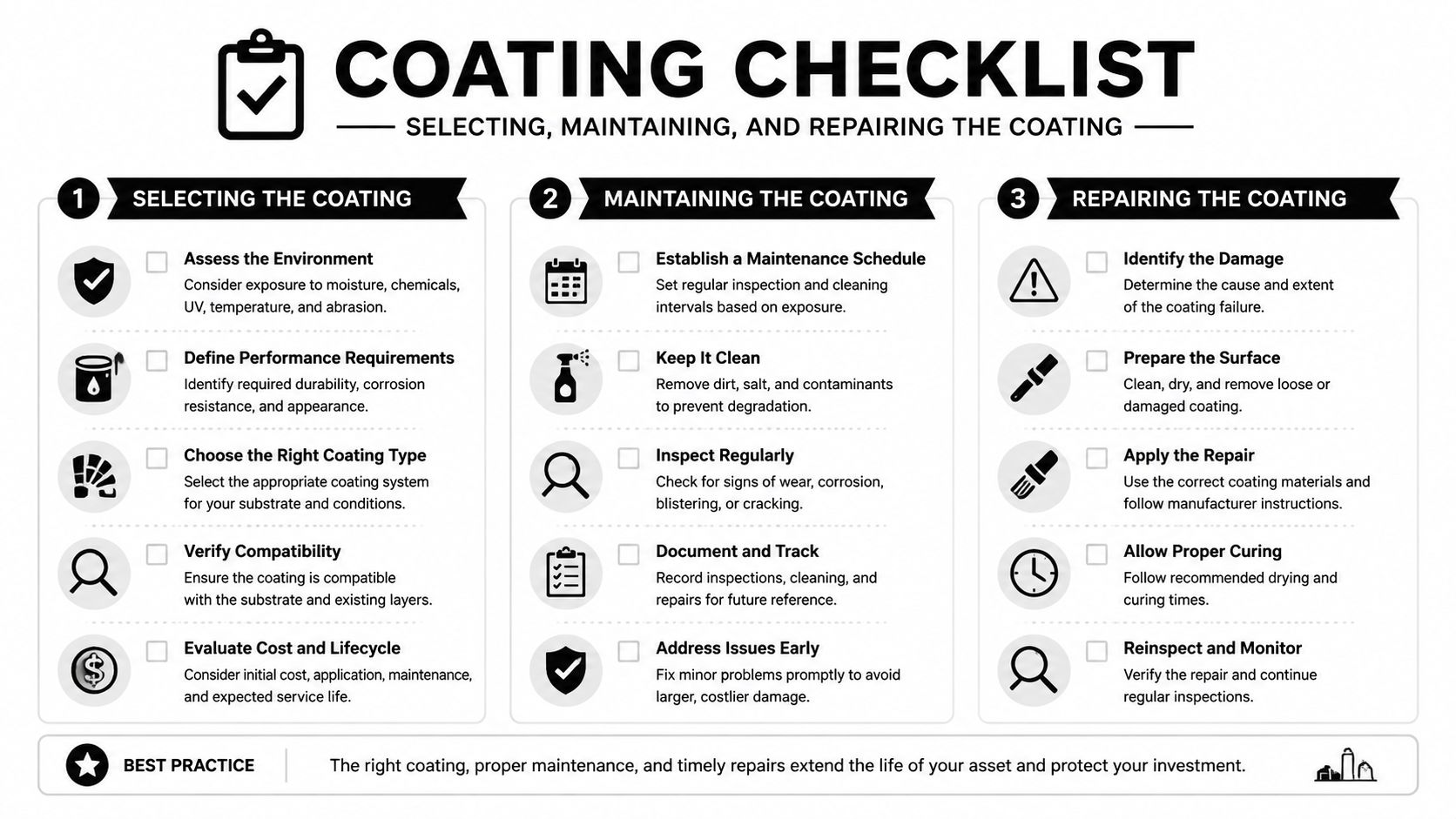
A clear lens can still fail if the coating was chosen from a hardness number alone. Start with the part. Identify whether it is bare polycarbonate, factory hard-coated polycarbonate, an aircraft-grade panel, an extruded sheet, or a previously repaired lens. Each substrate changes the preparation method, adhesion risk, optical tolerance, and whether polishing is safe.
Then match the coating to its working conditions:
- UV load: Outdoor headlights, windscreens, and windows need weathering resistance as well as abrasion resistance.
- Contact pattern: Wiper cycles, repeated washing, dry wiping, and glove contact produce different wear.
- Impact environment: Bugs, road grit, ice, and loose debris favor a film that can absorb movement instead of cracking.
- Service expectation: A show vehicle, daily driver, motorcycle, and industrial window require different maintenance plans.
Use a screening checklist
Ask the supplier for test data that represents the actual substrate and use. A result is useful only when its test method is clear.
- Taber result: Check the delta haze after a stated cycle count, wheel type, and load. Comparative testing found uncoated acrylic and polycarbonate near 25% to 35% delta haze, while commercial hardcoats were roughly 2% to 6%. One higher-performing example measured about 0.8% after 1,000 cycles, according to abrasion-resistant coating data.
- Adhesion evidence: Prefer cross-hatch or pull-off results on polycarbonate, rather than data collected only on glass or metal.
- Weathering behavior: Check for yellowing, cracking, delamination, and haze after UV exposure. A peer-reviewed spray-coated UV-protective layer showed no crack formation or adhesion loss during 20 weeks of UV testing, as reported in this polycarbonate coating study.
- Optical balance: A multilayer glazing study reported 29 GPa hardness, 78% visible-light transmittance, and less than 3% UV transmittance. Those results show how a specialized system balances hardness, visible light, and UV blocking. See the multilayer polycarbonate glazing research.
- Flexibility: Ask how the film responds to thermal movement and impact. A hard surface that cannot move with the panel may crack or lose adhesion.
Maintain the surface gently
Use pH-neutral wash chemistry with plenty of lubrication. Let the solution and microfiber carry away grit instead of pressing particles into the film. Avoid abrasive polishing unless the manufacturer permits correction and you know how much coating will be removed.
Inspect after real road exposure, not only according to a calendar. Reapply when wear becomes visible, water behavior changes, or documented product guidance calls for it. The coating is a working film, so washing technique and drying habits affect how long it remains clear.
Repair according to the failure
A light mark may accept controlled spot correction if the coating manufacturer allows it. A localized defect can sometimes be cleaned, lightly prepared, and recoated. Widespread haze, cracking, delamination, or uneven adhesion requires a broader repair. Remove unstable material, return to a sound substrate, and rebuild the system instead of sealing over the failure.
Automotive glazing research shows why coating architecture matters. A layered hard-coat system reduced Bayer delta haze from 53.5% to 6.6% and Taber delta haze from 35.8% to 0.8%, according to research on layered polycarbonate glazing protection. The result does not guarantee field life. Layer design, adhesion, and flexibility can matter as much as nominal hardness, especially when the panel expands, flexes, and receives repeated impacts.
A durable scratch resistant coating for polycarbonate should stay clear, remain attached, tolerate movement, and respond predictably to maintenance. Use that model when comparing products or planning repairs.
APEX NANO by Titan Coatings offers Alpha Quartz, Ultra Spray, and Apex Glass options for detailers, DIY owners, and mobile technicians working with protective surfaces, including polycarbonate-related applications and glass windshields. Visit APEX NANO – Titan Coatings to review the product range and match the workflow to the substrate, exposure, and application experience.
0 Comments