
A customer pulls into your bay with a two-year-old coating already cracking along the leading edge of the hood, and the question is always the same: bad product, or bad prep? Most of the time it's neither. The film broke because the panel underneath it moved and the coating couldn't.
Detailers who work four seasons see this constantly. A finish that looked flawless at a July handover shows fine crazing by the second February, long before its claimed service life is anywhere near done. The crack itself isn't the interesting part. What it tells you about how the film was built is.
Learn dark matter technologies means, how it compares with the waxes, sealants and glass-type ceramics already on your shelf, which surfaces it suits, how to apply it without trapping grit, and how to test a durability claim before you put it on someone's paint.
What Dark Matter Technology Actually Is
Stand in a cold car park in Seattle in January and look at a black sedan that has spent six weeks in road salt, rain and freeze-thaw. The paint has gone flat and faintly chalky, the trim is dull, and the owner wants to know what kind of film could take that treatment for a decade. That is the question this whole category exists to answer.
Dark matter technologies is Titan Coatings' term for a family of nanomaterial and polymer systems: carbon nanotubes combined with high-performance coating chemistry, built for cars, boats and aircraft, and formulated to resist UV rays, scratches and chemicals. Titan Coatings is a manufacturer of elastomer-based ceramic coatings for automotive surfaces, and the chemistry has an industrial lineage: the business developed elastomers for industrial and defense applications, then adapted them for automotive, aviation and marine surfaces. Whether that heritage matters to you depends on one thing, the durability the film still shows after the panel has flexed, oxidized and been washed a few hundred times.
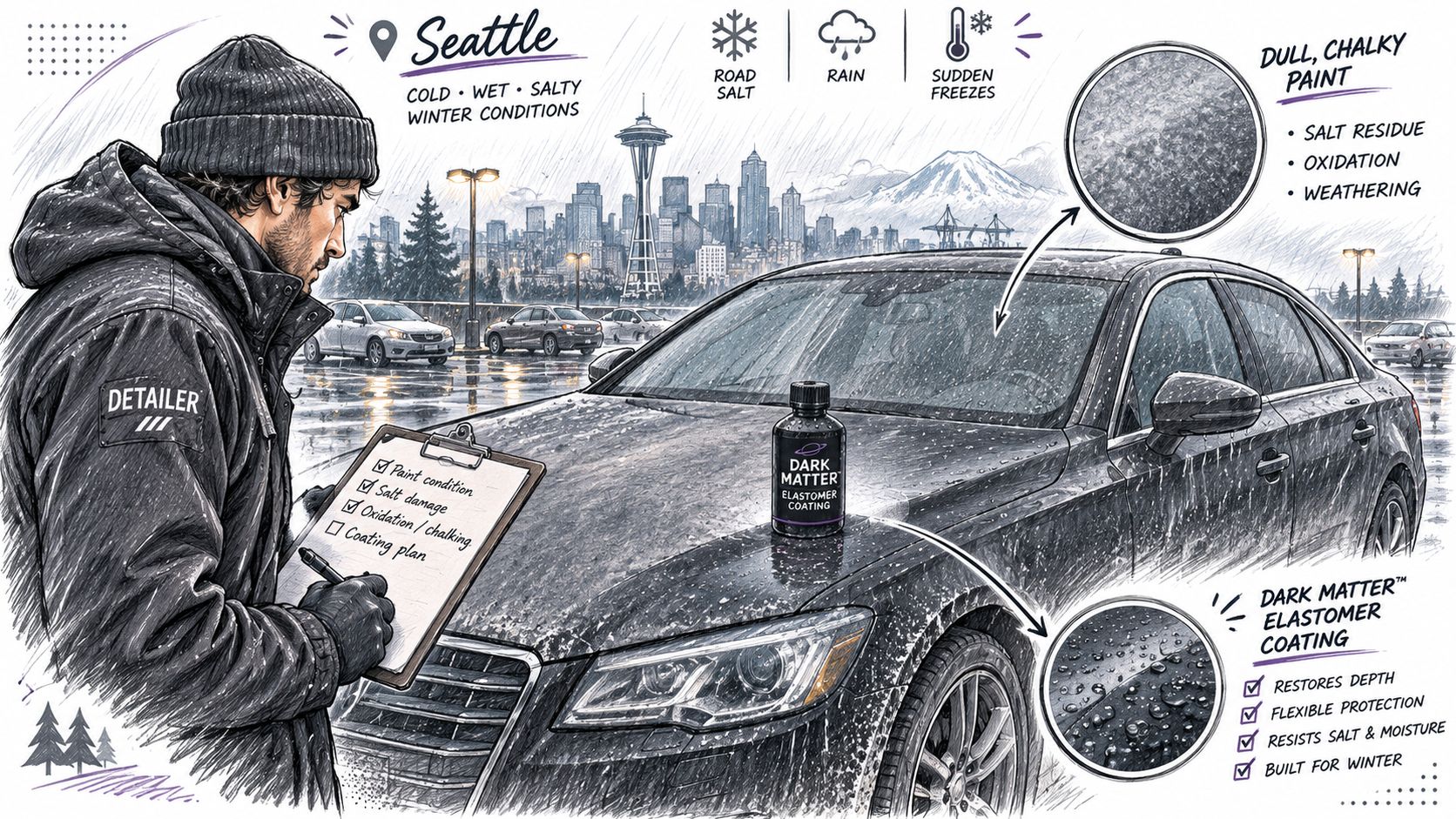
The name needs handling with care. No regulator certifies "dark matter technology," and no universal industry standard defines the phrase. It describes a family of nanoscale engineering approaches, which means the label itself proves nothing. The film on the panel does. What carries weight instead is test data: Titan Coatings is an ISO 9001 certified company that puts its coatings through third-party ISO/ASTM testing and real-world analysis in some of the harshest climates and extreme conditions around the globe.
The rebar analogy
Carbon nanotubes work inside a coating much like rebar inside concrete. Concrete carries compression well but cracks under tension; the steel holds it together and spreads the load. In a polymer film, the nanotubes and associated ceramics reinforce a matrix that stays flexible, so the surface resists abrasion without turning brittle.
That combination matters far more than a raw hardness figure. A film can be hard and still fail in one winter.
Dark matter technology is a reinforced, flexible film. Its value shows up in years of protection, not in the name on the bottle.
The field around it is substantial. The Precedence Research market release reports the global nanotechnology market generated USD 8.78 billion in 2025, which tells you there is a real supply chain of material scientists, test labs and formulators behind these products rather than one company working alone.
The same uptime logic drives commercial operators, where a sidelined vehicle is lost revenue rather than a disappointed weekend owner. Anyone who schedules trailer repair for Tampa Bay fleets already thinks in those terms: keep the equipment earning, keep the repair bill rare. A protective film earns its keep the same way.
Keep three properties in mind for the rest of this piece: hardness, flexibility and UV resistance. They're what you'll test.
How It Stacks Up Against Other Coatings
Say a customer brings in two black SUVs from the same street. One wears wax refreshed whenever the owner has a free Sunday. The other got a hard ceramic in October, looked brilliant through the holidays, then showed hairline crazing along the badge recesses by March. Same color, same weather, different failure mode.
| Coating type | Flexibility under temperature swings | Typical durability | Best use |
|---|---|---|---|
| Carnauba wax | Low, softens in heat | Short, usually a repeat cycle measured in washes and seasons | Gloss on a regularly driven car |
| Synthetic polymer sealant | Moderate | Longer than wax, still dependent on wash habits | Protection between washes |
| Traditional glass ceramic coating | Low to moderate, can craze with temperature swings | Often multi-year when preparation and aftercare stay careful | Hard-surface protection with careful preparation |
| Dark matter elastomer ceramic | High, designed to flex with temperature change | Varies with preparation, climate and maintenance; the claim to test is flexibility plus UV and chemical resistance | Paint, glass and trim where flexibility matters |
| Paint protection film | High, flexible film | Multi-year sacrificial service, replaced when it yellows or takes enough impacts | High-impact front-end panels |
Carnauba wax is where plenty of owners start. It gives a warm, wet-looking gloss on dark metallic paint, then asks for another round before the season is over. Nothing wrong with that if the ritual is part of the fun.
Synthetic polymer sealants stretch the gap between applications and sit in the middle on flexibility. They make sense when the goal is easier washes and decent protection without booking a full decontamination day.
Traditional glass ceramic coatings are built around hardness. Their weak point is stiffness: when heat expands a panel and cold contracts it, film and substrate move at different rates, and a rigid layer has fewer places to put that strain.
Dark matter elastomer ceramics chase a different pairing: hard against wash marring and chemicals, flexible enough to travel with the panel. That is the row where durability should be read as a range shaped by prep, climate and maintenance, not as a fixed promise on a product page.
Paint protection film belongs in its own class. It is a thick, flexible urethane sheet that absorbs stone strikes on front-end panels and protects what it covers rather than the whole car.
The four criteria behind the table
Judge any option on flexibility under temperature change, typical durability, application effort and best use. Durability ranges move with climate, surface preparation and how the vehicle gets washed, so treat them as planning ranges rather than guarantees. The practical check is simple: ask how the film behaves at panel edges, badges and creases after freeze and heat, because that is where stiffness gets exposed first.
If you want the chemistry side explained in plainer terms, this comparison of the difference between ceramic and polymer coatings is worth ten minutes before you buy.
The shortlist rule: pick the coating that matches your surface and your climate, not the one with the biggest number on the label.
Why Flexibility Survives Freezing and Heat
A car sits outside overnight at minus 10°C. By nine the next morning it's been hit with a heater blast, driven through wet slush and parked in a warm garage. Over that single morning, the hood, the glass and the plastic trim all changed dimension, and they didn't change by the same amount.
That's the mechanism behind most coating cracks. Aluminum, steel, plastic and glass expand and contract at different rates, and the film on top is bonded to all of them. A rigid coating can't follow the movement underneath, so strain accumulates at the edges, around badge recesses and along panel creases until it releases as a craze line or a split.
An elastomer layer behaves differently. It stretches with the panel and recovers, spreading the strain across the film instead of concentrating it at one point. Titan describes its elastomer ceramics as hard like glass and flexible, and that pairing is what drives service life.
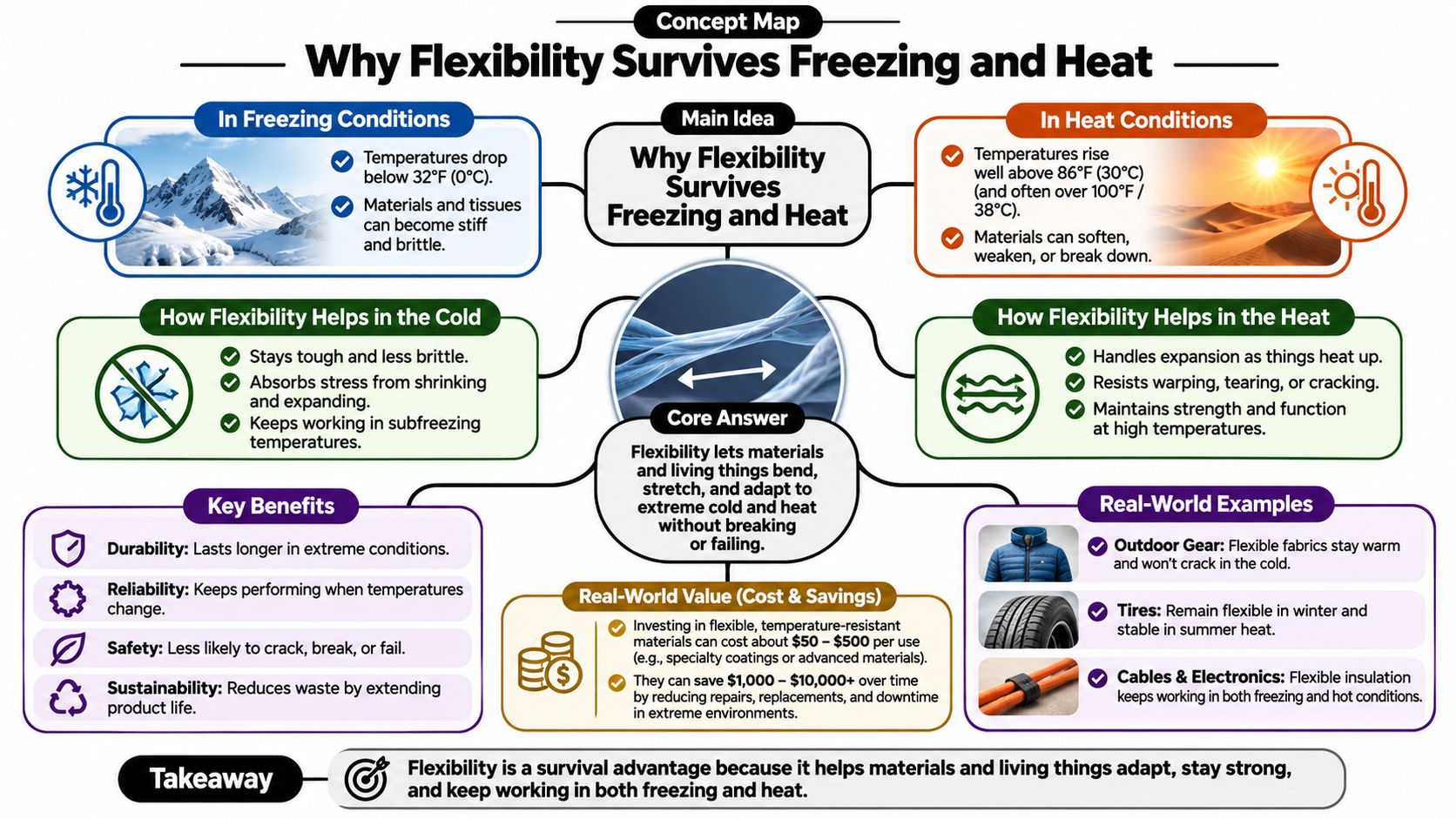
Think about a window pane and a rubber band. The pane is hard, and it shatters. The band is flexible, and it scratches if you drag a key across it. Neither one alone is a good coating. The target is a film that resists the key and still bends with the panel in February.
That's why a hardness figure on its own tells you so little. Scratch resistance is one property. Crack resistance under thermal cycling is a separate one, and it's the property that decides whether the coating is still intact in year three.
A check you can run yourself
You don't need a lab to see whether a film handles temperature cycling.
- Cold soak it. Leave the coated panel outside overnight in the coldest weather you get.
- Hit it warm. Wash that panel with warm water the next morning, the way a tunnel wash would.
- Inspect under diffused light. Use a handheld LED or the shaded side of the building, not direct sun, and look for fine parallel lines near edges and recesses.
- Repeat. Two or three cycles tell you more than one.
Details of how heat, cold, salt and UV stack up on a working vehicle sit in this guide to harsh weather conditions.
A film that bends with the panel is less likely to crack than one that only resists scratches.
Which Titan Product Fits Your Surface
Say a driver parks outside through a cold snap, then runs a warm wash on Saturday. The panel expands, contracts and takes grit at highway speed, so the right question is not “which bottle sounds strongest,” it is “which film stays bonded and bends with that panel.” Start with the surface, then match the chemistry to the abuse it sees.
| Product | Surface or job | Why it fits |
|---|---|---|
| ZEUS | Painted automotive panels exposed to UV, scratches, chemicals and temperature swings | Premier automotive coating with Dark Matter Technology; forms a dense, erosion-resistant HyperQuartz ElastoTek Membrane that stays flexible and self-healing; coverage is 3ml/m² and maintenance uses ULTRA V4.0 or OMNIGUARD |
| PX10 | A reinforced base coat under a fuller stack | Micron membrane base coat strengthened by Dark Matter Technology; coverage is 3ml/m²; stacking time is 2 hours, including between layers, with VulcanTX155 or HydroTX145; maintenance uses ULTRA V4.0 or OMNIGUARD |
| TRITON TX550 | Boat hulls and marine surfaces below the water line | Built for marine contamination build-up below the water line, with up to 2-3 years of protection; professional use only, with access through a local distributor |
ZEUS fits the car that lives outdoors. The value is the membrane behavior: Dark Matter Technology reinforces a HyperQuartz ElastoTek film made to resist erosion while still moving with the panel. That matters more in February and July than a single hardness number, because a rigid film can pass a scratch check and still open a fine crack after repeated cold soak and warm wash cycles.
PX10 is the base-layer choice when the plan is a stack, not a single coat. A detailer laying it down needs the sequence respected: micron membrane first, the stated stacking window observed, then VulcanTX155 or HydroTX145 only if the job calls for that build. Coverage stays lean at 3ml/m², so stretching the film thinner to “make the bottle go further” defeats the point.
TRITON TX550 belongs to the marine conversation. A hull below the water line faces contamination build-up that paint on a commuter car never meets, and the stated protection window is up to 2-3 years. Access is narrower too: this is professional use through a local distributor, not a weekend shelf purchase.
The decision rule stays simple. Name the substrate, name the climate, then decide whether the job needs a flexible automotive membrane, a reinforced base coat for stacking, or a marine product with restricted access. The wider Titan Coatings line grew from elastomers developed for industrial and defense work before being adapted for automotive, aviation and marine surfaces, which is why flexibility sits at the center of the product logic. For that chemistry in plain terms, the Titan Coatings elastomer overview explains how an elastomer-based ceramic differs from a conventional hard shell.
That surface-first test travels beyond cars. Someone speccing protection for a work vehicle can compare UTV bed liner types and watch the same three-way pull between hardness, adhesion and flex, then bring the sharper question back to the hood, the hull or the aircraft panel: will this film still be intact after the temperature swings it will meet?
How to Separate Proof From Marketing Claims
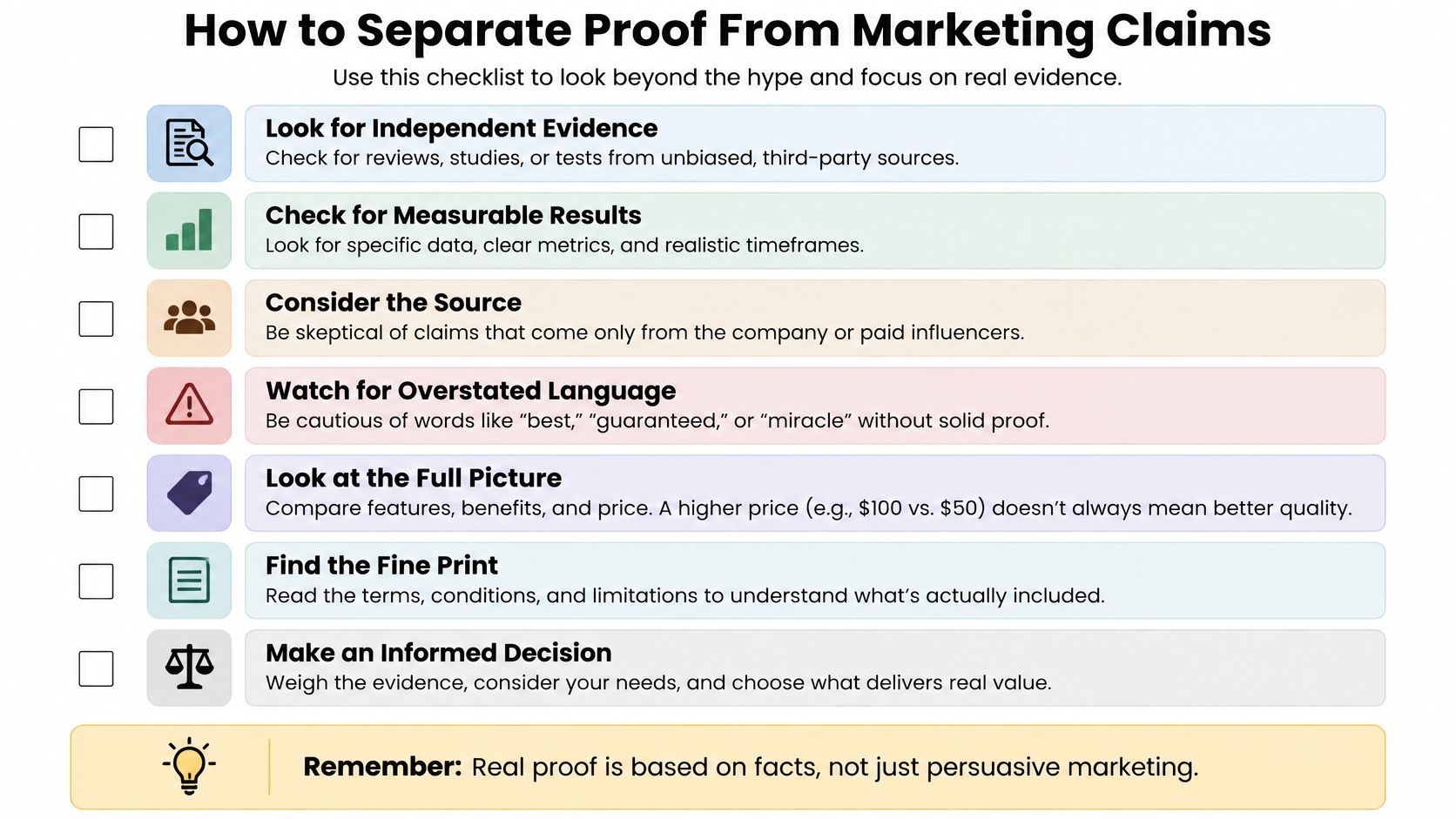
Five questions separate a technical claim from a slogan. Ask them in this order.
- Which standard was used, ISO or ASTM, and did an independent lab run the test? A manufacturer's own bench isn't third-party data.
- Does the claim separate hardness from visible marring? Scratch depth and scratch visibility are different outcomes, and a film can resist deep damage while still showing fine marks.
- Is there temperature cycling data? A cold soak followed by a warm wash tells you more than a static hardness reading.
- Is the UV exposure defined? Wavelength, dose and film thickness all need stating, or the result means nothing.
- For a self-healing claim, what are the recovery time and the temperature range? "Regenerates" without those two numbers isn't a claim you can check.
Volume of invention isn't proof of performance. A 2025 white paper reported by the Hunan provincial government counts more than 1.07 million nanotechnology patents granted globally between 2000 and 2025. That's a huge amount of activity, and it still doesn't tell you whether a specific bottle works on a specific bonnet in a specific climate.
Certification deserves the same precision. Titan Coatings is an ISO 9001 certified company, and that standard covers management processes, not the measured results of any individual product. It says the systems are consistent. It doesn't say the coating beat a scratch test.
The test that catches most claims: ask for the standard number, the lab and the before-and-after measurements. Miss any of those three and you're reading marketing copy, not data.
What Titan does state is that it combines third-party ISO/ASTM testing with real-world analysis in some of the harshest climates and extreme conditions around the globe. That's the company's own claim, and it's the sort of thing you can ask to see documented. The third-party testing explainer walks through what that evidence should look like.
Videos are useful for one thing: technique. Watch how a detailer loads the applicator, spreads the product and buffs it off. Do not treat a video as test data. A camera can show you a bead of water. It can't show you a year of thermal cycling.
How to Apply an Elastomer Coating Safely
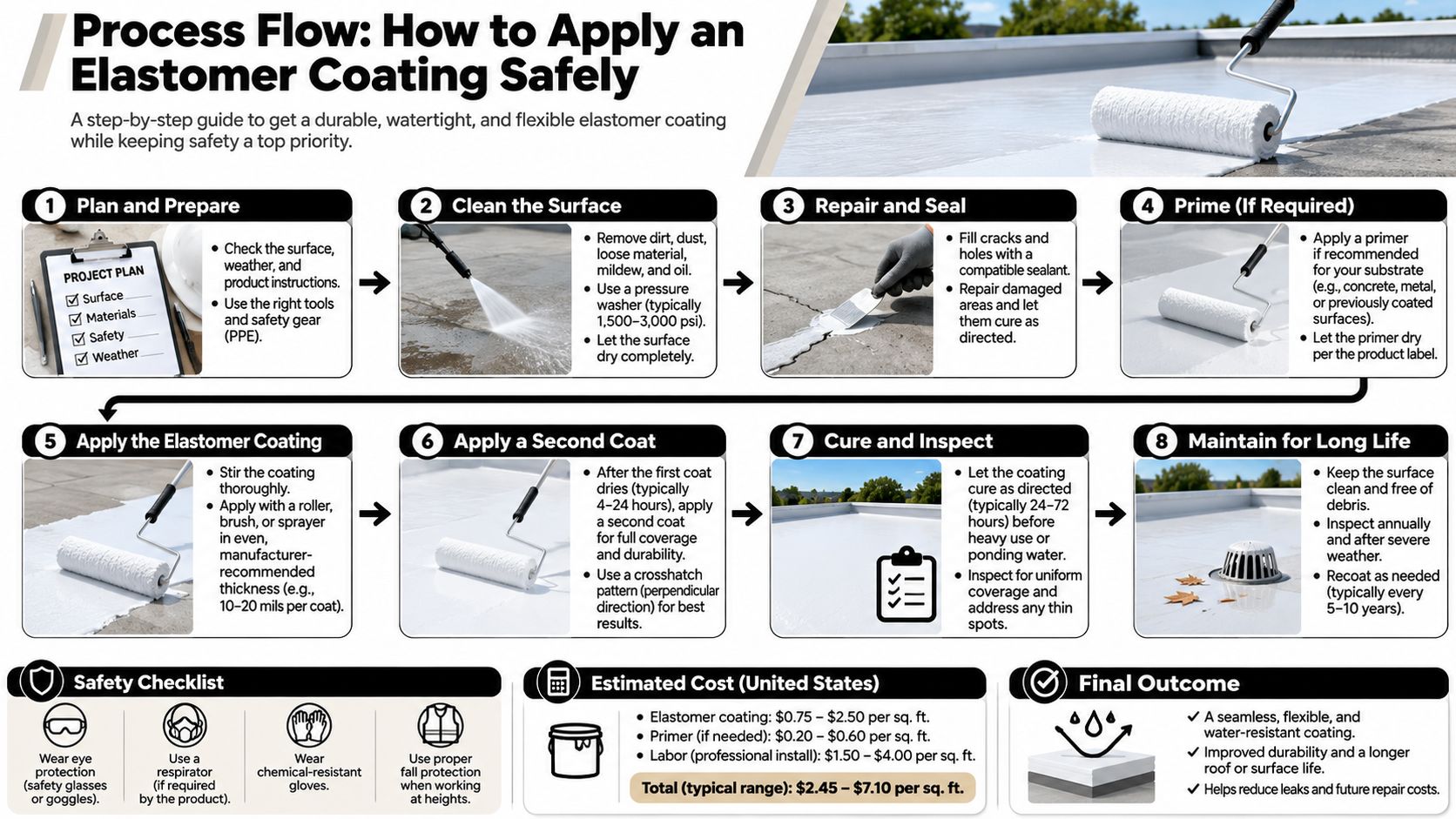
Say an owner brings in a truck coated last spring, and the hood feels like sandpaper under a fingertip. The grit came from skipped decontamination: fallout bonded to the paint before the film went on, and it cured into a rough patch no polisher can remove without cutting the coating off. That one skipped step causes more bad results than any technique mistake, and it's why the sequence below starts with cleaning rather than with the bottle.
- Wash, decontaminate and dry completely. Iron fallout and tar carry through the film, so clay and panel wipe first.
- Dispense what the label specifies, no more. Apply Alpha Quartz in a light, even layer; Apex Glass takes 10-15 drops. Overloading floods the panel and makes buffing harder.
- Spread in a cross-hatch pattern over a section you can cover comfortably. Two directions of travel catch the high and low spots a single pass misses.
- Wait for the product to flash, then act inside the window. The wet sheen fades as the film sets; once that moment passes, residue turns stubborn and stops wiping clean.
- Wipe off the bulk with a short-pile microfiber. Short pile lifts the liquid without smearing it back across the panel.
- Buff with a long-pile microfiber until nothing remains. Long pile gets into body lines and badge edges where residue hides.
- Inspect under diffused light and work out any haze before it sets. Once cured, haze becomes a polishing job rather than a wipe.
- Keep the panel dry and sheltered until the film has fully set. Water during the initial cure interferes with film formation.
Safety and the lifecycle question
Read the SDS before you open the bottle. Ventilate the space, wear respiratory protection when you're spraying rather than hand-applying, and capture spent towels and wash water instead of rinsing them down a drain.
A 2026 review of titanium dioxide coating risks recommends task-based monitoring and engineering controls for spraying and sanding, notes that embedded particles may still trigger biological responses after aging, and calls for testing aged coating-derived particulates rather than pristine nanopowders. Its lifecycle analysis, published in Environments, found nanomaterial synthesis contributed 28-61% of climate-change impacts in examined coating systems, while improved durability cut annualized emissions by up to 55%.
Before you spray: controls belong at the task, not the product label. Spraying, sanding, polishing and removal each need their own capture and ventilation answer.
A cured film doesn't erase those considerations, and longer service life only counts as an environmental gain when it's measured against release, maintenance, removal and disposal pathways.
For the prep and finishing side of the job, Evo Dyne Products detailing advice covers the decontamination stage well. Applicator choice and flash timing get a closer look in this guide to the main coating application methods.
A good result looks even and streak-free, with no residue visible when you sweep a light across the panel at a shallow angle.
Choose Your Coating and Start Protecting
Choose by surface first, then by the way you really work. The product table above is the reference, so use it rather than memory.
Then run these in order.
- List every surface you plan to protect: paint, glass, wheels, trim, gelcoat.
- Match each surface to a product in the table, one line at a time.
- Run the five questions from the testing section against the product information you've been given.
- Patch-test a small panel and inspect it after two cold and warm cycles before committing to the whole car.
- Review the safety steps before you spray or apply anything, including ventilation and towel disposal.
- Browse the range in the Titan Coatings shop and pick the product that fits.
Two properties are worth watching over time. Titan Coatings improves and enhances its brilliance over time, and its excellent hydrophobic properties significantly reduce water spots and stains, which is what you want from a film that stays on the car through several seasons rather than one.
The right coating isn't the one with the highest number on the bottle. It's the one still intact on your vehicle, in your climate, after the second February.
APEX NANO – Titan Coatings builds elastomer-based ceramic coatings around its proprietary Dark Matter Technology, combining carbon nanotubes with high-performance polymers so the film stays hard like glass while flexing through freeze-thaw cycles and summer heat. If you want paint, glass and trim protection that survives the seasons rather than one good summer, start with the Alpha Quartz or Apex Glass range and match the product to your surface. Visit APEX NANO – Titan Coatings to see the full lineup and choose the coating built for your climate.
0 Comments