
You wash the vehicle, dry it carefully, and expect the finish to look protected. A few months later, the gloss seems flatter, water spots remain after the next wash, and the clear coat feels rough even though the car has never been through a major hailstorm. That’s how harsh weather conditions usually damage a vehicle. The problem builds through repeated exposure, not one dramatic afternoon.
Sunlight, moisture, road salt, freezing temperatures, dust, and contaminated water each create a different stress. Together, they can wear down a finish faster than a coating selected only for hardness can handle. Long-term protection starts with understanding that pattern, then choosing a coating and maintenance routine that can flex with the vehicle instead of just sitting on top of it.
The Hidden Cost of Weather Exposure on Your Vehicle
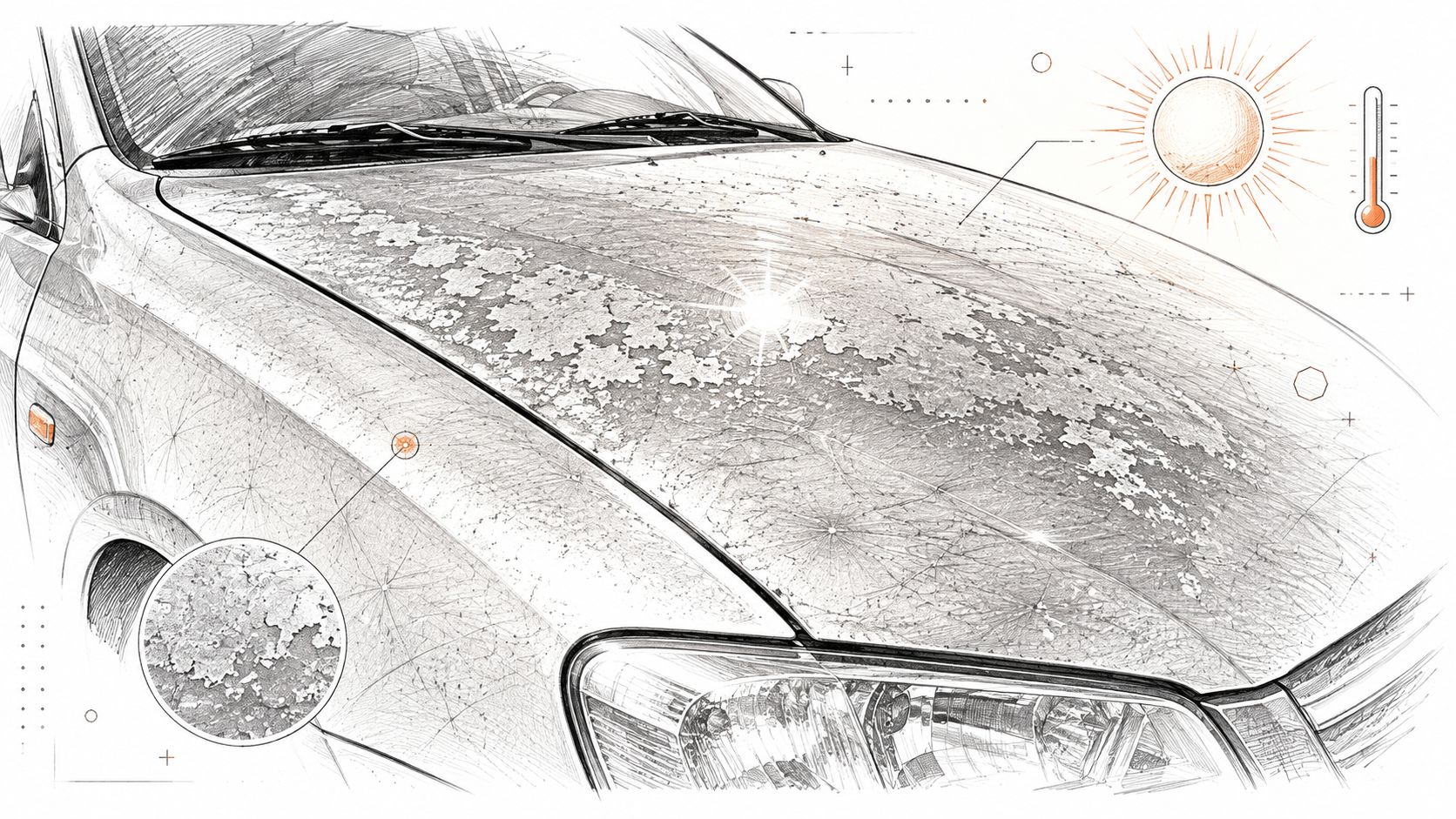
A customer once brought in a dark-colored vehicle that looked fine from several feet away. Under inspection lighting, the hood showed dull oxidation, irregular water marks, and tiny surface defects that polishing could reduce but not fully erase. The owner remembered washing it regularly and couldn’t identify one event that caused the damage. The finish had spent months absorbing sunlight, moisture, heat, airborne grit, and temperature changes.
That distinction matters. Hail, flooding, and heavy ice are obvious events, so owners respond quickly. Daily exposure is harder to notice because each individual cycle appears harmless. A hot afternoon dries mineral-rich water onto the paint. A cold night contracts the panel and coating. Road salt remains in seams and chips. The next sunny day adds ultraviolet stress before the surface has fully recovered.
Why small exposures become visible damage
The first signs are often easy to misread:
- Dullness: The finish loses clarity as oxidation and surface contamination interfere with reflected light.
- Persistent spotting: Water evaporates and leaves deposits that become more difficult to remove when they repeatedly dry onto the panel.
- Fine cracking: A rigid film can struggle as the underlying panel expands and contracts through changing temperatures.
- Rough texture: Dust, salt, insect residue, and road film bond to a surface that no longer sheds contamination effectively.
The World Meteorological Organization recorded 11,072 disasters linked to weather, climate, and water hazards from 1970 to 2019, with 2.06 million deaths and US$3.64 trillion in losses over that period. Weather and water hazards represented 50% of recorded disasters, 45% of disaster-related deaths, and 74% of economic losses in the WMO’s assessment (World Meteorological Organization disaster-loss data). Those figures concern broad disaster impacts, not paint failure, but they put the persistence of environmental stress into perspective.
Practical rule: Treat weather protection like maintenance, not emergency recovery. A coating can reduce contamination bonding and help preserve the finish, but it can’t reverse neglected preparation or repair exposed damage.
The same principle applies to RVs and larger vehicles, where roof seams, exposed panels, and collision damage can let moisture reach vulnerable materials. If weather has already created structural or exterior damage, professional repair may be more appropriate than cosmetic correction, including get help from Class A RV Repairs for RV roof and collision concerns. For vehicle owners deciding whether a coating is worthwhile before problems become severe, the practical question is addressed in this guide to whether car paint protection works.
How Different Weather Threats Attack Paint and Coatings
Paint doesn’t experience weather as one single hazard. Each condition creates a different failure path, and combined exposure can be more damaging than any factor working alone.
Salt corrosion
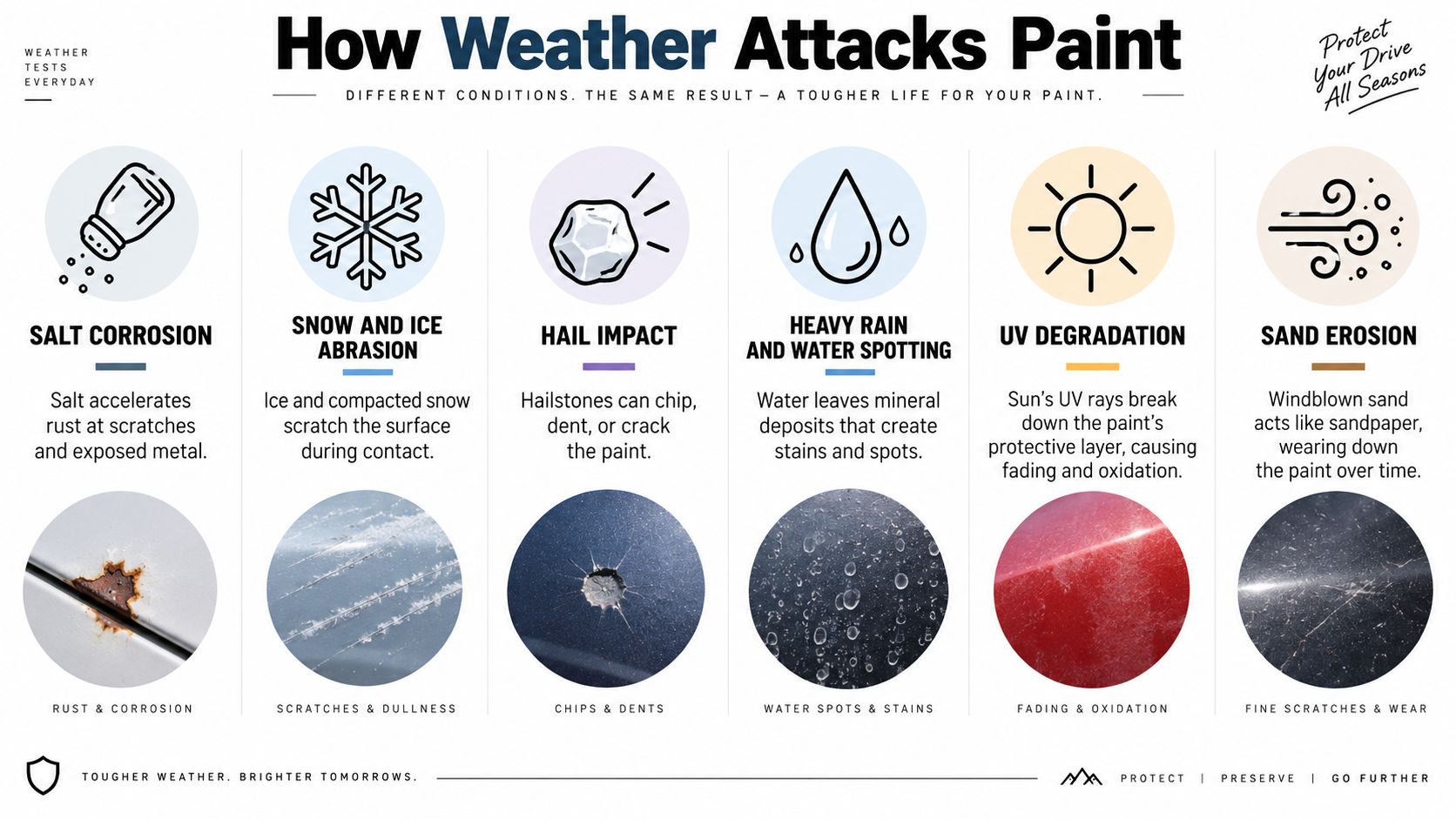
Salt attracts moisture and supports chloride ingress into scratches, chips, seams, and other weak points. Once contamination reaches exposed metal, oxidation can begin beneath or beside the coating. Winter drivers often notice the result around wheel arches, lower doors, rocker panels, and behind trim, where salt-laden spray settles and stays wet.
A coating helps most when the surface is properly prepared and the owner removes contamination before it accumulates. It isn’t a substitute for repairing chips or washing the underside and wheel areas.
Snow and ice abrasion
Snow itself is soft, but packed ice, gritty slush, and scraping tools can drag abrasive material across the finish. Removing frozen contamination with force can create marring even when the coating remains chemically intact. De-icing products also leave residues that attract more moisture.
Use a suitable snow brush, thaw frozen buildup where practical, and never treat a coating as permission to scrape aggressively.
Hail impact
Hail creates concentrated physical impacts that can dent panels, chip paint, and damage trim. No surface coating should be presented as a replacement for body repair or insurance assessment after a significant impact. A coating may help keep an intact finish easier to clean, but it cannot prevent all impact damage.
Heavy rain and water spotting
Rain carries dust and atmospheric contaminants onto the vehicle. As droplets evaporate, dissolved minerals can remain on the surface. Repeated wetting and drying makes spotting more difficult to remove, especially when the vehicle sits in direct sun after rainfall.
Bird residue creates a similar problem because moisture and acidic contamination can attack the finish while it sits. Remove it promptly using the process described in this practical bird-poop removal guide.
UV degradation
Ultraviolet exposure can break polymer chains and degrade pigments. Accelerated UV testing reflects this concern by using controlled irradiance, high temperatures, condensation, and, in some protocols, spray. Combined UV and moisture exposure is more informative than sunlight exposure alone because heat and water can speed up surface breakdown.
Sand and dust storms
Windblown particles erode exposed surfaces and create fine marring during careless washing. Dust also settles into badges, trim edges, panel gaps, and textured plastics. Rinse thoroughly before contact washing, because wiping dry dust across paint turns loose contamination into an abrasive layer.
Why Coating Flexibility Matters More Than Hardness
Hardness has a place in coating selection. A hard film can resist some light marring and may feel smooth after installation. The problem starts when hardness becomes the only measurement that matters. A coating can resist a fingernail or light abrasion and still fail when the vehicle repeatedly moves between cold mornings, heated panels, moisture, and freezing conditions.
Rigid materials expand and contract differently from the substrate beneath them. With enough cycling, stress concentrates around microscopic weaknesses. Research on a PTFE-coated gas diffusion layer found that pre-existing cracks grew as thermal cycles increased, and after 400 cycles, some areas had completely cracked and exposed the carbon fibers underneath (PTFE thermal-cycling study). That result isn’t a direct prediction for automotive paint, but it demonstrates the mechanism detailers see in brittle protective films. A crack that begins too small to notice can become an exposed pathway for water and contamination.
Comparing the technologies
| Technology | Flexibility | Thermal Cycling Resistance | UV Protection | Best Use Case |
|---|---|---|---|---|
| Traditional ceramic | Often more rigid | Depends on formulation and substrate movement | Formulation-dependent | Gloss, chemical resistance, and routine road exposure |
| Polymer sealant | Generally more flexible | Usually better suited to movement than rigid films | Formulation-dependent | Straightforward seasonal protection and easy maintenance |
| Elastomer coating | Designed to combine hardness with flexibility | Better suited to repeated expansion and contraction when properly formulated | Formulation-dependent | Vehicles facing temperature swings, impacts, and ongoing exposure |
Carbon nanotube reinforcement adds an important mechanical dimension. A review of CNT and epoxy nanocomposites reported reduced mass loss in every CNT-filled group compared with neat epoxy and described a “remarkable improvement in abrasion resistance” across the tested concentrations (CNT and epoxy nanocomposite review). The takeaway is not that every nanotube coating performs identically. It’s that reinforcement can improve wear resistance while the surrounding formulation supplies the flexibility needed for movement.
Titan introduced elastomer coatings using nanotube technology and its Dark Matter technology. Titan’s elastic coatings are designed to be hard like glass while remaining flexible, a combination that addresses the compromise between surface resistance and thermal movement. The coating can flex rather than immediately crack when the vehicle moves from frozen conditions to hot panels, and that flexibility can also help when insects or light road debris strike the surface.
A high hardness rating tells you about one type of resistance. It doesn’t tell you how the film behaves after repeated expansion, contraction, impact, moisture, and washing.
The Nordtest method makes this distinction measurable. Nordtest NT POLY 184 evaluates elastic coatings by repeatedly opening and closing substrate cracks in a programmable freeze-thaw or heating-cooling chamber, then recording cycles to rupture or failure (Nordtest NT POLY 184 crack-bridging method). For harsh weather conditions, that kind of movement-based evaluation is more useful than relying on hardness language alone. More detail on the practical difference appears in Titan’s explanation of coating flexibility.
Testing Standards That Prove Coating Durability
A product description can use words such as durable, ceramic, military-grade, or weatherproof without telling you how the material was evaluated. Before buying a coating, ask what was tested, which exposure was combined, what failure looked like, and whether the result came from a controlled laboratory procedure or a marketing demonstration.
Look for combined weather exposure
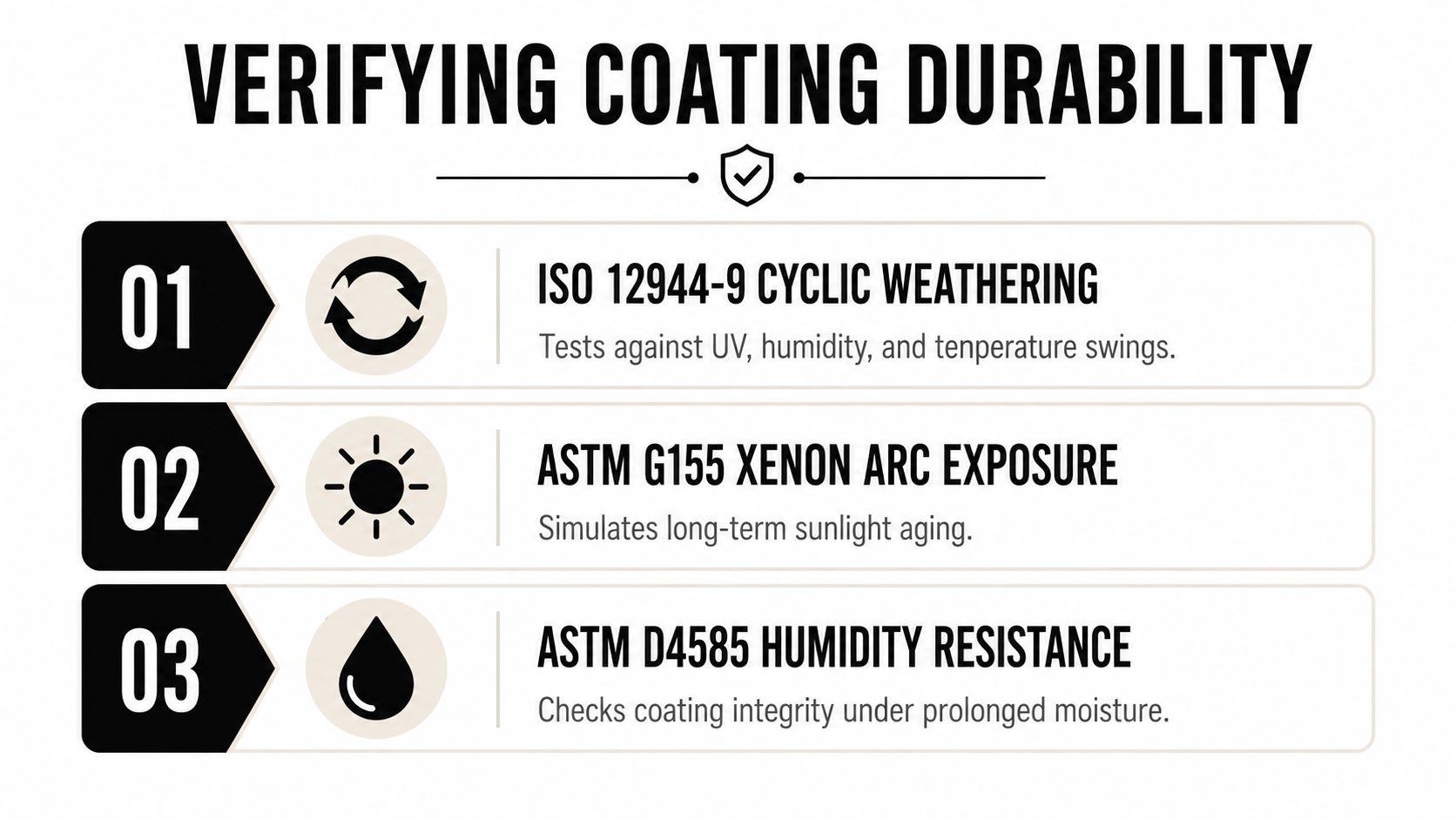
Cyclic testing matters because outdoor damage rarely arrives in isolation. A widely cited ISO 12944-9 style regime combines 72 hours of UV exposure, 72 hours of salt spray, and 24 hours of freezing, repeated for 25 weeks, or about 4,200 hours (salt-spray and cyclic-weathering explanation). The sequence is useful because chloride ingress, photochemical breakdown, and freeze-induced crack growth can reinforce one another.
A salt-spray-only result can show resistance to a corrosive atmosphere. A UV-only result can show resistance to light and heat. Neither one fully represents a vehicle that gets salted, washed, dried in sunlight, frozen overnight, and driven through wet contamination.
Check the UV protocol
ASTM G154-style accelerated UV cycles commonly use a light step around 60°C, with some cycles reaching 70°C, followed by dark condensation at 50°C. Some protocols add a short spray step to simulate thermal shock and surface erosion (accelerated UV weathering conditions.) Ask whether the test measured gloss retention, color change, cracking, adhesion loss, or another defined failure point. “UV tested” alone doesn’t identify the result.
Ask how movement was measured
Thermal cycling can produce microcracks and delamination at the metal and coating interface. Independent research identifies freezing and thawing as detrimental factors in protective coating design (research on environmental temperature variation and coating damage). A credible specification should therefore address adhesion, flexibility, crack bridging, or thermal shock instead of listing only surface hardness.
Use the Titan coating testing information as a starting point for the questions you should ask. You’ll get a clearer comparison by requesting the test method, exposure conditions, substrate, preparation process, and failure criteria. A dramatic demo may show short-term behavior. A documented test tells you what the manufacturer measured.
Titan Coatings Solutions for Every Weather Challenge
The right product depends on the surface, the application environment, and the weather problem you’re trying to manage. A paint coating for a vehicle body doesn’t solve windshield visibility, and a fast spray product may suit a mobile detailer better than a multi-stage studio installation.
Alpha Quartz for flexible exterior protection
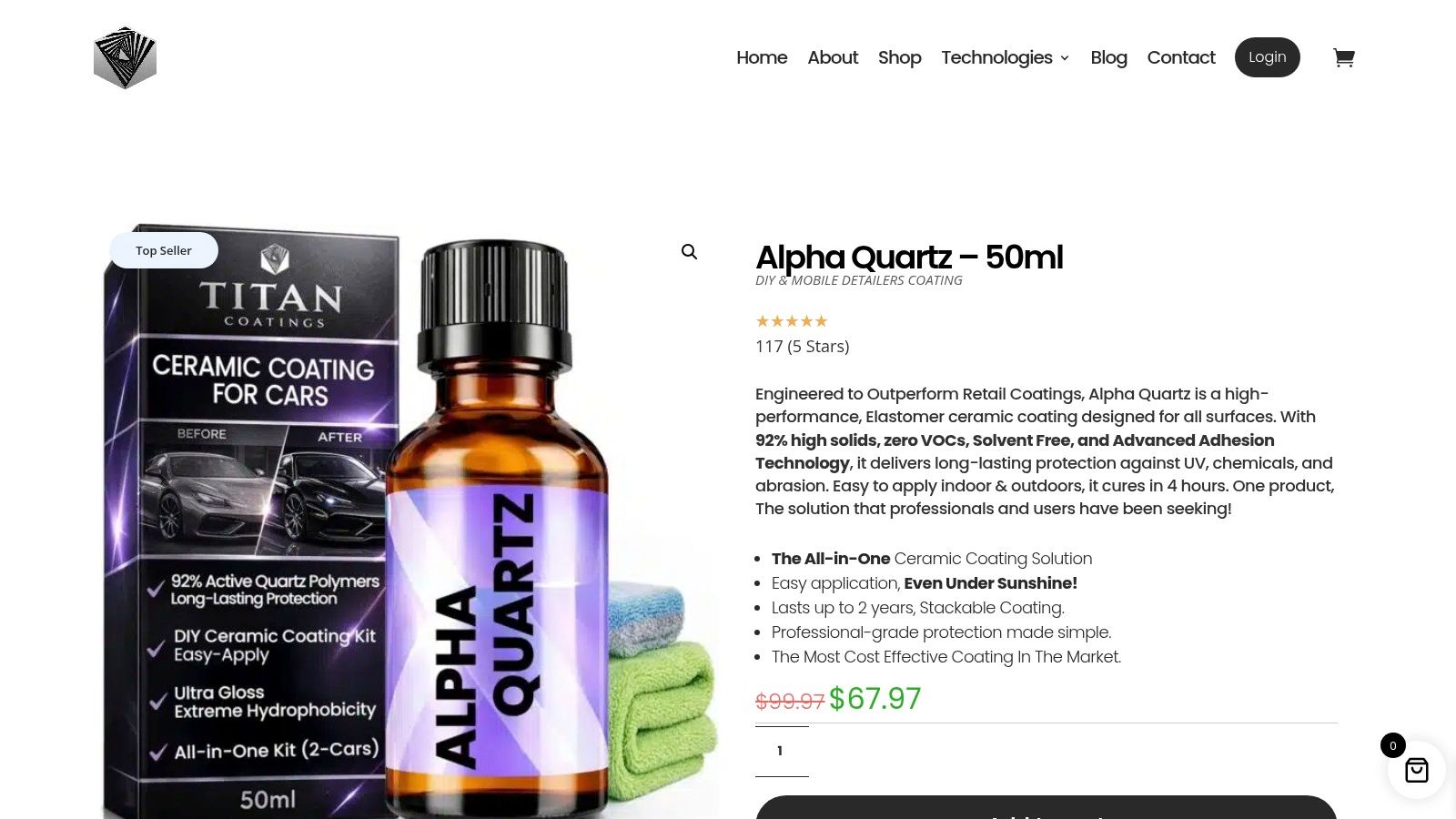
Titan’s Alpha Quartz elastomer coating is positioned for DIY users and mobile detailers who need an installation process that doesn’t require a permanent studio setup. Its product information identifies 92% high solids and advanced adhesion technology. The formulation is intended to remain flexible across temperature extremes, which is the feature to prioritize when a vehicle faces repeated movement, freezing conditions, heat, insects, and road contamination.
Start with a cool, clean surface. Wash thoroughly, chemically decontaminate where appropriate, remove bonded residue, correct the paint if needed, and finish with a suitable panel wipe. Apply in a controlled section, follow the product’s stated flash and leveling guidance, inspect under proper lighting, and keep the vehicle away from contamination while the coating cures according to the manufacturer’s instructions.
Alpha Quartz won’t repair a rust bubble, hide deep scratches, or prevent dents from hail. It can form a flexible protective layer over properly prepared paint, helping the owner manage the repeated exposure that causes gradual loss of gloss and surface integrity. Read more about Titan’s elastomer coating technology before choosing it for a client’s climate.
Apex Glass for rain-stressed driving
Windshield protection solves a different problem. Apex Glass Ceramic Coatings is designed to improve visibility by encouraging water to shed from the glass and helping reduce the way rain and contamination cling to the surface. That can make wet-weather driving less stressful, especially when glare, spray, and dirty water reduce visual clarity.
The application is simple, but glass preparation determines the result. Clean the windshield, remove old residue and mineral deposits, dry it completely, apply the coating evenly, allow it to set as directed, and remove excess material without leaving smears. Wiper blades must also be clean and in good condition. A coating can’t compensate for worn rubber, damaged glass, or poor visibility caused by a dirty interior windshield.
Ultra Ceramic Spray for fast service
Ultra Ceramic Spray fits quick maintenance work, mobile detailing, and owners who want a simpler application than a full coating installation. Wash and dry the vehicle, work on a clean and cool panel, apply a light amount to a manageable area, level it with a clean microfiber towel, and use a second towel to finish the surface. Follow the product instructions for cure and exposure before returning the vehicle to harsh conditions.
It’s a practical option when time, weather, and workspace limit the installation process. It doesn’t replace the preparation discipline or film behavior of an elastomer coating, but it can support a repeatable maintenance program for vehicles that already receive regular care. Titan’s shop page gives detailers and vehicle owners a place to compare available products before selecting the appropriate system.
Building a Weather-Specific Maintenance Protocol
A coating’s survival depends on what happens after installation. The same vehicle can age very differently depending on whether it sits outside, travels salted roads, gets washed with clean tools, or remains covered in wet contamination between washes.
Winter and salt-heavy routes
Rinse salt from lower doors, wheel arches, wheels, and underbody areas before contact washing. Use a pressure rinse to release loose grit, then wash from the cleanest panels toward the dirtiest areas with separate tools for wheels and paint. Don’t scrub frozen residue or drag a dry towel across a dusty panel.
Inspect chips and exposed edges after the roads clear. A coating can reduce the effort needed to remove contamination, but it can’t seal a deep paint chip or stop corrosion that has already reached the substrate.
Hot, bright climates
UV exposure and heat demand consistent shade, gentle washing, and prompt removal of bug residue, bird droppings, and mineral-rich water. Park under cover when practical, but don’t assume a covered vehicle needs no inspection. Dust can collect on the finish, and poorly maintained covers can create friction.
Watch for fading, reduced water behavior, roughness, staining, and areas that no longer clean evenly. Those signs may call for decontamination or a maintenance layer rather than immediate full reapplication. Fleet owners can also benefit from a structured HGV maintenance resource from Woolpit Truck Repairs when they’re managing repeated environmental exposure across larger vehicles.
A workable inspection rhythm
Check the finish after major seasonal changes and after extended outdoor parking. Keep a record of the product used, application date, affected panels, and any areas that needed correction. That history helps a detailer distinguish normal contamination from coating failure.
Road-weather conditions also create a safety burden. U.S. data associate adverse atmospheric conditions with about 9% of fatal crashes, 11% of injury crashes, and 13% of property-damage-only crashes, representing more than 3,400 fatal crashes, 191,000 injury crashes, and 550,000 property-damage-only crashes in an average year (Federal Highway Administration road-weather impact data). Clean glass, functioning wipers, and a finish that releases contamination easily are maintenance details with practical value beyond appearance.
APEX NANO – Titan Coatings provides exterior, glass, and spray coating options for vehicles facing repeated UV, moisture, salt, freezing, and heat exposure. Visit APEX NANO – Titan Coatings to compare the right protection for your vehicle, detailing workflow, and local weather conditions.
0 Comments